You've built something technically credible. The pilots are running. The funding is in. But when a potential partner or investor lands on your website or marketing materials, what do they see? For most climate tech startups, the answer is a brand that reads like a grant proposal — dense with technical claims, light on proof, and disconnected from the business outcomes that buyers and capital allocators actually care about.
The issue here isn't aesthetics. Sustainability branding in 2026 has become a matter of credibility infrastructure. Regulators are issuing significant fines for vague "eco-friendly" claims, and 88% of companies now treat sustainability positioning as a long-term value driver. The bar for what counts as a credible green brand has moved substantially, and enforcement actions against companies like Shein, Nike, and Lufthansa have made that concrete.
This guide breaks down how climate tech companies — from early-stage startups building their first brand to growth-stage teams repositioning for enterprise deals — can build a sustainability brand identity that holds up to scrutiny. You'll learn where most green brands lose credibility, how to align visual identity with operational reality, and how to measure whether your positioning is actually working.
TLDR: key takeaways
- Environmental responsibility must appear in every brand touchpoint, not just marketing
- 52% of consumers believe companies mislead on sustainability — authenticity is non-negotiable
- Align visual identity, messaging, and operations; misalignment between what you claim and what you do is where most brands lose credibility
- Sustainable products grow 28% faster and command premium pricing with higher customer loyalty
- Strategic design delivers measurable environmental impact even on lean budgets
What is sustainable branding in 2026?
Sustainable branding is the practice of building a brand identity that reflects genuine, verifiable commitment to environmental and social responsibility — not just in marketing copy, but across operations, supply chain, and measurable outcomes.
For climate tech startups, this distinction carries particular weight. Technical founders often default to leading with the science, but investors and enterprise buyers are looking for signal clarity: does this company know what it stands for, who it serves, and how it proves its claims? A sustainability brand that can't answer those questions creates friction at exactly the wrong moments — pitch meetings, partner conversations, procurement reviews.
The 2026 evolution:
The landscape has shifted significantly since 2020, driven by three major forces:
- Consumer scrutiny has intensified - Buyers now research claims and demand proof, not promises
- Regulatory enforcement is real - Italy fined Shein for vague sustainability claims, while UK authorities banned campaigns from Nike and Lufthansa for misleading messaging
- Green credentials drive competitive advantage - Companies with credible sustainability positioning attract enterprise customers, long-horizon investors, and top talent
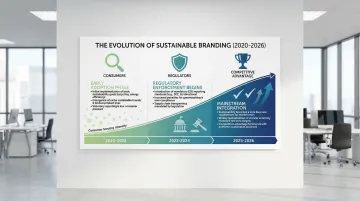
Sustainable branding in 2026 means your environmental commitments must be verifiable, your supply chain transparent, and your impact measurable. In 2026, proof matters more than proclamation.
Why sustainable branding matters now
Consumer demand is mainstream but discerning
The sustainability signal your brand sends matters beyond marketing. The "Eco-Active" consumer segment — buyers who actively factor environmental impact into purchasing decisions — now represents 22% of the market, projecting $1 trillion in spending by 2027. But this is only the visible layer of the shift.
For climate tech startups, the more immediate pressure comes from the enterprise buyer side. Corporate procurement teams, utility partners, and asset managers increasingly screen vendors for verifiable sustainability credentials before engaging. While 80% of buyers express willingness to pay more for sustainable products, that willingness dissolves when sustainability claims can't be substantiated with data.
The practical takeaway: sustainability positioning in your brand has to clear a higher bar in 2026 than it did three years ago. Vague "green" language doesn't just fail to differentiate — it actively triggers skepticism from sophisticated buyers who've seen too many unsubstantiated claims.
Investor and stakeholder pressure
This shift in buyer behavior mirrors what's happening in capital markets, where sustainability has become a financial consideration rather than an optional signal:
- 60% of public companies will update investment methodologies to include sustainability metrics by 2026, according to Gartner
- Over 80% of companies can now quantitatively measure returns on sustainability investments
- Talent attraction depends on it - Strong sustainability records matter for recruiting technical and commercial talent, while weak positioning creates friction in hiring
The greenwashing backlash
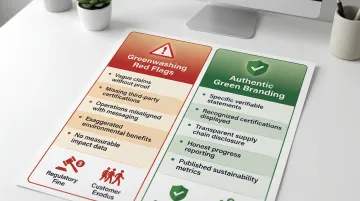
Regulators worldwide now enforce strict standards, with visible consequences. Beyond Shein's €1 million penalty, enforcement actions span industries:
- UK's Advertising Standards Authority banned major brand campaigns for unsubstantiated environmental claims
- EU Green Claims Directive and FTC Green Guides prohibit vague terms like "eco-friendly" without specific supporting evidence
- 88% of "Evangelist" consumers say they'd stop purchasing from brands caught greenwashing
Greenwashing triggers regulatory fines and customer exodus, not just reputational damage. For climate tech companies specifically, the consequences are compounded: your credibility with sophisticated buyers — utilities, enterprise procurement, institutional investors — depends on your claims being backed by evidence.
Core principles of green brand identity
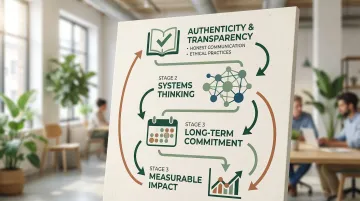
Authenticity and transparency
Authenticity means genuine alignment between proclaimed values and actual practices. Without this, sophisticated buyers — particularly enterprise procurement teams and institutional investors who've developed sharper instincts for sustainability theater — will identify the gap quickly.
Climate tech companies face a particular credibility challenge here: the industry has a history of overclaiming, which means even legitimate startups with genuine impact are subject to extra scrutiny. Building an authentic brand means doing the work to make your claims defensible before you make them publicly.
What authentic brands do differently:
- Avoid broad terms; use specific, verifiable statements backed by data
- Earn certifications from recognized bodies like B Corp or Climate Neutral
- Disclose both wins and areas for improvement — 94% of consumers reward complete transparency
Systems thinking
For climate tech startups, systems thinking in branding means recognizing that your brand has to speak to multiple distinct audiences — investors reviewing your deck, enterprise buyers evaluating your pitch, policy stakeholders assessing your regulatory positioning, and technical partners checking your credibility. Each of these audiences reads your sustainability claims through a different lens, and your brand system needs to hold up across all of them.
Practically, this means:
- Connecting design, supply chain ethics, packaging, and culture into one coherent narrative
- Embedding take-back programs and material recovery into your business model where applicable
- Aligning sustainability positioning across employees, customers, and partners so the story is consistent regardless of who's telling it
Long-term commitment
Sustainable branding requires ongoing commitment, not one-time campaign pushes. For early-stage companies, this is often where the credibility gap opens up: the brand makes promises the operations haven't yet caught up to. Communicating the roadmap honestly is itself a form of transparency that sophisticated audiences respect. This means:
- Setting multi-year goals with clear milestones
- Reporting progress transparently, including setbacks
- Evolving your approach based on new evidence and stakeholder feedback
Measurable impact
To maintain credibility and drive improvement:
- Track specific KPIs: carbon reduction, waste diversion, ethical sourcing percentages
- Adopt recognized frameworks like GRI or SASB for consistency
- Publish annual sustainability reports with third-party verification
Building your sustainable brand: a strategic framework
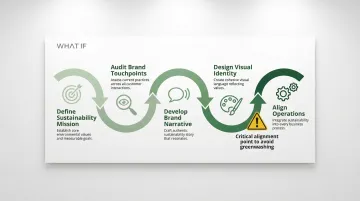
Step 1: Define your sustainability mission
Most climate tech founders are deeply familiar with their company's environmental impact — it's often why they started the company. The harder question is translating that internal clarity into external positioning that means something to buyers, investors, and partners who don't share your technical background.
Conduct an honest assessment of your environmental and social impact. Ask:
- Where does our business create the most environmental harm?
- What sustainability issues matter most to our stakeholders?
- What can we realistically commit to changing, with a timeline and proof points?
The output here should be concrete commitments tied to your operations, not a mission statement written for a grant application. Specificity is what separates credible sustainability positioning from the claims that trigger scrutiny.
Step 2: Audit current brand touchpoints
Identify where sustainability is already visible in your brand and where the credibility gap exists:
- Visual identity - Does your logo, color palette, and imagery communicate environmental values, or does it look like a generic tech startup?
- Messaging - Are sustainability commitments visible in your website copy, investor materials, and partner-facing content?
- Operations - Do your internal practices (energy use, waste management, sourcing) actually match your external claims?
- Customer experience - Does every interaction reinforce your positioning, or does the brand feel inconsistent across touchpoints?
For many climate tech companies at the seed or Series A stage, this audit reveals a brand maturity gap: the technology and traction have moved forward, but the brand presence still looks early-stage. That gap costs you in partner conversations and investor meetings where first impressions matter.
Step 3: Develop your sustainable brand narrative
This is where technical founders most commonly struggle. The instinct in climate tech is to lead with mechanism — how the technology works, what makes it novel, why the engineering is superior. But buyers and investors are primarily asking a different question: what changes for my operation, my portfolio, or my supply chain if I work with you?
Your brand narrative needs to bridge that gap:
- Start with why - Explain the specific problem you're solving and why sustainability is core to that solution, in terms your buyer can translate into their own business case
- Show the journey - Share where you started, where you are, and what your milestones look like going forward
- Avoid overclaiming - Be honest about what's proven at pilot scale versus what's projected at commercial scale
- Make it concrete - Connect sustainability to real operational outcomes, not just environmental vision
Step 4: Design your visual identity system
Your visual identity should communicate green values without relying on surface-level clichés. For climate tech companies, whose audiences include engineers and institutional investors alongside more general audiences, "eco-green" aesthetics that signal sustainability theater are a liability rather than an asset.
Sustainable design choices:
- Eco-friendly materials - For any print touchpoints, use recycled paper, soy-based inks, and minimal packaging
- Minimalist approaches - Reduce ink coverage through white space; use efficient typefaces that improve digital accessibility
- Nature-inspired palettes - While green signals environmental focus, earth tones and blues can differentiate while maintaining credible eco-associations
- Digital optimization - Reduce file sizes (use SVG formats), avoid energy-intensive colors in digital interfaces
Color psychology considerations:
Research confirms that green facilitates processing of environmental concepts and increases pro-environmental product selection. That said, the risk for climate tech brands is defaulting to "eco-green" aesthetics that look indistinguishable from a lifestyle brand rather than a serious technical company. Consider broader palettes that convey stability and institutional credibility alongside environmental association.
Step 5: Align operations with brand promises
Your internal practices must match external claims. This is the step that most companies skip when they're moving fast, and it's the step that creates the most exposure — both regulatory and reputational.
For climate tech startups, this alignment question shows up most acutely when brand claims outpace what's been proven at scale. The answer isn't to hold back on the brand until every claim is bulletproof; it's to be precise about what's been demonstrated versus what's projected:
- Energy efficiency - Transition to renewable energy sources and track consumption reduction
- Waste reduction - Implement measurable zero-waste goals and document diversion rates
- Ethical sourcing - Audit suppliers for environmental and social standards
- Employee engagement - Train teams on sustainability commitments so the positioning is reflected internally, not just externally
Misalignment between operations and branding leads directly to greenwashing accusations and regulatory penalties. More practically, it creates friction in enterprise sales cycles where buyers conduct due diligence.
Implementing sustainable brand identity
Sustainable visual design
Visual identity in 2026 is being evaluated for carbon footprint alongside aesthetics — a shift that's moved from forward-thinking to standard practice at design-conscious organizations.
The Design Council's recent brand refresh demonstrates this shift clearly. They conducted a sustainability audit that directly influenced their design guidelines, minimizing carbon impact through white space, reduced ink coverage, and accessible typefaces. For climate tech companies, whose brand credibility is tied to demonstrated environmental commitment, this kind of operational alignment in design is a baseline expectation rather than a differentiator.
Implementation tactics:
- Use digital-first design systems that minimize print production requirements
- Select typefaces optimized for screen legibility and lower energy rendering
- Design packaging with minimal materials while maintaining brand coherence
- Build modular visual systems that adapt across touchpoints without requiring redundant production runs
Sustainable packaging and materials
Physical brand touchpoints offer concrete opportunities to embody sustainability claims:
- Choose recycled, recyclable, or compostable materials and include clear end-of-life instructions
- Reduce packaging volume and weight to lower transportation emissions
- Design for reuse rather than single-use disposal wherever the product category allows
- Source and produce packaging regionally to reduce the carbon footprint of logistics
Finding the right design partner
Translating sustainability commitments into a coherent visual identity is where most internal teams hit a wall. The challenge isn't creative capacity — it's knowing what credible sustainability communication looks like in a climate tech context, where your audience includes investors reviewing decks, engineers evaluating technical claims, and procurement teams screening vendors.
This is typically where a specialized design partner adds the most leverage. Agencies that work specifically in climate tech already understand the regulatory landscape, the trust signals that matter to enterprise buyers, and the visual language that reads as credible rather than performative. What if Design, for example, works with climate tech companies on exactly this translation problem — turning complex positioning into brand systems that hold up across investor materials, partnership conversations, and public-facing channels. You can see examples of that work at whatifdesign.co.
If you're evaluating design partners, the key question isn't whether they can make something look "green." It's whether they understand what your buyers need to see to trust you.
Measuring your sustainable brand impact
Understanding your sustainable brand's performance requires tracking both perception and business metrics. These measurements demonstrate ROI and guide strategic decisions.
Brand perception metrics
Track how your key audiences perceive your sustainability positioning:
- Brand health studies - Regular surveys measuring awareness of sustainability commitments among target audiences
- Social listening - Monitor how your environmental initiatives are discussed across relevant channels
- Net Promoter Score (NPS) - Measure whether sustainability positioning drives recommendation behavior among existing customers and partners
- Sustainability Perceptions Score - According to Brand Finance's 2023 report, drivers analysis can determine how much sustainability perception is influencing purchase consideration and link that to financial value
Beyond perception, business metrics reveal the tangible impact of your sustainability positioning on financial performance.
Business performance indicators
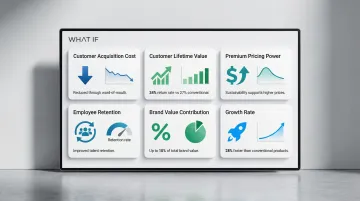
Monitor metrics that show whether your sustainable brand is generating commercial traction:
- Customer acquisition cost - Strong green brands often benefit from word-of-mouth and earned credibility, which reduces acquisition costs over time
- Customer lifetime value - McKinsey research shows brands with sustainable offerings see 34% customer return rates versus 27% for conventional brands
- Premium pricing power - Track whether sustainability positioning is supporting higher price points in competitive situations
- Employee retention - Sustainability-driven cultures improve talent retention and reduce hiring costs, particularly relevant in competitive technical hiring markets
- Brand value contribution - Kantar research shows sustainability perceptions can contribute up to 10% of brand value for top global brands
Getting started: taking action today
For early-stage startups
Early-stage climate tech startups have one structural advantage: no legacy brand to undo. The brand maturity gap that plagues more established companies — where the brand hasn't kept pace with traction, funding, or team growth — doesn't exist yet. The challenge instead is building investor-ready messaging and a presence that signals you're fundable and partnership-ready, even when the technology is still proving itself at pilot scale.
Immediate steps:
- Define your sustainability mission before finalizing brand identity — this becomes the foundation for all positioning decisions
- Choose design partners who understand climate tech communication, not just visual design
- Document your journey from the start — transparency about your sustainability evolution builds first partner trust over time
- Select sustainable materials for all brand touchpoints, even when bootstrapping
Sustainable branding doesn't require massive investment. A digital-first brand system, built around your actual proof points, can establish credibility with investors and partners without the overhead of a full agency engagement.
For established businesses rebranding
For growth-stage companies, the challenge is different: you're closing a credibility gap rather than building from scratch. Your brand may have been built when the company was earlier, and it no longer reflects the traction, funding, or market position you've reached. Closing that gap requires transforming existing perceptions while maintaining whatever brand equity you've built.
Immediate steps:
- Conduct a comprehensive brand audit to identify gaps between current positioning and where the business actually is
- Engage stakeholders in the rebranding process — employees, customers, and partners should understand the shift and why it's happening
- Phase implementation to avoid overnight transformations that feel disconnected from your history
- Communicate the journey transparently, acknowledging past limitations while demonstrating genuine progress
Addressing common barriers
Budget constraints:
The relevant comparison for most climate tech startups isn't agency cost versus zero — it's the cost of showing up underprepared at a fundraising close, a partnership announcement, or an industry conference. Specialized agencies that work in climate tech get to a full brand system faster because the onboarding is shorter: you're not spending the first three weeks explaining what carbon accounting or grid modernization means.
Resource limitations:
Prioritize high-impact changes:
- Start with customer-facing touchpoints that directly influence how investors and partners perceive you
- Focus on operational changes that reduce costs while improving sustainability positioning (energy efficiency and waste reduction both carry financial ROI)
- Prioritize digital channels, which offer flexibility and lower environmental impact than print
Credibility concerns:
If you're early in your sustainability journey, focus on transparency rather than perfection. Claiming more than you've proven is the fastest route to a credibility problem. Buyers and investors in climate tech are experienced enough to recognize the difference between a company that's honest about where it is on the journey and one that's overclaiming — and they consistently prefer the former.
The climate tech companies that build durable brands aren't the ones with the most elaborate sustainability messaging. They're the ones where the brand reflects what's actually true — about the technology, the team, the progress, and the proof. Get that alignment right, and your brand stops being a liability in partner and investor conversations and starts being an asset.
If your sustainability positioning isn't landing with the audiences that matter, a brand audit is often the fastest way to identify where the signal breaks down.
Frequently asked questions
What is sustainability branding?
Sustainability branding is building a brand identity that authentically reflects your commitment to environmental and social responsibility. It integrates these values across all touchpoints — from visual identity to operations to stakeholder relationships.
What are the 5 P's of sustainability?
The 5 P's framework from the UN's 2030 Agenda for Sustainable Development are: People, Planet, Prosperity, Peace, and Partnership. For brands, this means addressing holistic impact beyond environmental metrics alone.
What are the 5 C's of branding?
The 5 C's — Clarity, Consistency, Credibility, Competitiveness, and Connection — apply with heightened importance to sustainable branding. Credibility becomes critical when environmental claims require proof, while Consistency must extend beyond messaging to operational reality.
What is the 3-7-27 rule of branding?
This principle states that customers need 3 exposures to notice your brand, 7 to remember it, and 27 to build trust. For sustainable brands, consistent exposure of credible sustainability messages across touchpoints is essential for building the trust that converts skeptical enterprise buyers.
How can companies avoid greenwashing in their branding?
Actionable steps to avoid greenwashing:
- Be specific with claims — avoid vague terms like "eco-friendly" or "green" without supporting evidence
- Provide third-party certifications and transparent data
- Acknowledge imperfections and show progress over time rather than claiming a perfection you haven't reached
- Focus on material impacts (carbon reduction, waste diversion) rather than superficial changes
- Ensure operational practices match external brand promises
How much does sustainable branding cost for startups and small businesses?
Sustainable branding doesn't require massive budgets. Strategic design choices, authentic storytelling, and digital-first approaches make it accessible at most stages. The investment required varies significantly based on scope, but specialized agencies that work in climate tech typically move faster than generalist ones because there's less time spent on context-setting. ROI comes through stronger positioning in competitive sales cycles, clearer investor-ready messaging, and reduced friction in partnership conversations — not just through premium pricing or faster growth rates alone.