You've put serious work into your technology. You might have closed a pilot, raised your first round, or brought on your first commercial lead. But when someone visits your website or opens your pitch deck, they encounter two different logo versions, inconsistent color palettes across materials, and messaging that reads like a technical brief.
This is not an aesthetics problem. It's a credibility signal problem. Investors and partners form quick judgments about operational maturity before they ever get on a call with you, and a fragmented visual presence suggests your company is still figuring itself out, even when the technology is sound.
The root cause is almost always the same: teams conflate brand identity with brand guidelines, treating them as the same thing. They are not. This article breaks down what each one actually is, why the distinction matters for climate tech companies specifically, and how to sequence them as your organization scales.
TL;DR
- Your identity is the complete visual system: logo, colors, typography, personality, values
- Guidelines document how to apply that identity consistently across teams and channels
- Identity comes first through strategic design work; guidelines follow to document proper usage
- Identity defines who you are; guidelines keep distributed teams aligned on presentation
- Cohesive identity plus documented guidelines builds faster market recognition and reduces execution friction
Brand guidelines vs brand identity: quick comparison
| Aspect | Brand identity | Brand guidelines |
|---|---|---|
| Purpose | Defines the visual and strategic essence of your brand | Documents rules for consistent application of brand identity |
| Components | Logo, color palette, typography, imagery style, brand voice, values, personality | Logo usage rules, color codes, font specifications, spacing requirements, dos and don'ts |
| Who creates it | Brand strategists and designers through a collaborative discovery process | Designers after brand identity is established, compiled in document format |
| When you need it | At company launch or during rebrand when defining your visual presence | Once identity is established and multiple people need to apply it consistently |
| Primary audience | External stakeholders (customers, partners) and internal teams who need to understand the brand | Internal teams, contractors, and partners who create branded materials |
What is brand identity?
Brand identity is the complete visual and strategic system that makes your company recognizable and credible. It covers the full sensory experience that represents your organization to the world: not just your logo, but every visual and verbal element that someone encounters when they come into contact with your brand.
Core components
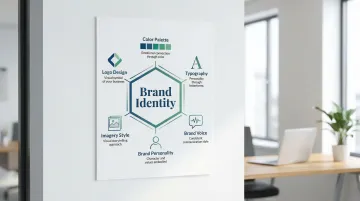
A comprehensive brand identity includes several connected elements:
- Logo design - The visual mark that serves as your primary identifier
- Color palette - Strategic color selections that apply color psychology principles (research shows that adhering to category color norms benefits high-involvement products like climate tech hardware)
- Typography - Font selections that communicate personality and ensure readability across contexts
- Imagery style - Photography, illustrations, and graphics that create visual consistency
- Brand personality - The human characteristics your brand embodies
- Brand voice - How your brand sounds in written and verbal communication
Strategic foundation
Brand identity stems from deeper strategic work. Before any visual design begins, strong identity development requires clarity on your mission, vision, values, and positioning. This foundation ensures your visual elements accurately represent what your organization stands for and where it is headed.
When your product involves complex or intangible technologies like carbon credits, grid software, or hydrogen systems, brand identity serves as a trust signal before your customers fully understand how the technology works. Your visual presence communicates professionalism and institutional credibility in that window before the technical conversation begins.
Creating the right visual signals
Once the strategic foundation is in place, your visual choices need to do real work. When you're selling to enterprise buyers or utility procurement teams, the design system has to communicate technical credibility and commercial readiness simultaneously. That is a harder design problem than it looks.
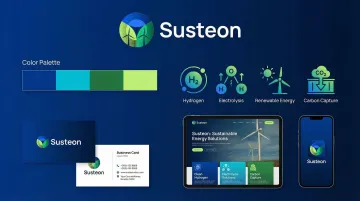
Susteon, a carbon capture and utilization company, uses an eco-circular mark with structured iconography for hydrogen, electrolysis, and carbon capture. Not because it looks sustainable in a generic sense, but because the icon system allows their sales team to explain a complex value chain visually, without a whitepaper. The visual system had to work for investors evaluating scientific validity and for partners assessing commercial readiness at the same time. That kind of intentionality is what separates a strategic brand identity from a designed logo.
Use cases of brand identity
Launching a new climate tech company means your brand identity is often the first thing an investor, potential partner, or enterprise buyer encounters before they understand your technology. Without a cohesive identity, you risk being dismissed as early-stage by the very stakeholders you need to close.
During rebranding, you revisit your brand identity when your mission, values, or market position has evolved significantly. If you started as a research project but now serve enterprise customers, you need an identity that reflects that maturation, not the scrappiness of the founding phase.
Consider Susteon's full brand system: it includes specialized icons representing hydrogen, electrolysis, renewable energy, and carbon capture, making complex technical concepts accessible without diluting the science. This comprehensive identity helped establish credibility with investors and enterprise partners by translating complex chemistry into a visual system that those audiences could evaluate on first contact.
What are brand guidelines?
Brand guidelines are the complete documentation that ensures consistent application of your brand identity across all channels and materials. Think of them as your brand's instruction manual, the single source of truth that prevents your carefully designed identity from fragmenting as your organization grows and more people begin creating assets independently. In commercial terms, that fragmentation is what prompts a procurement contact or investor to quietly question whether your organization is as operationally ready as your pitch claims.
Core components
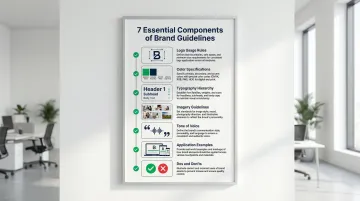
Comprehensive brand guidelines typically include:
- Logo usage rules - Minimum sizes, clear space requirements, acceptable variations, and prohibited alterations
- Color specifications - Exact codes (HEX, RGB, CMYK, Pantone) for digital and print applications
- Typography hierarchy - Font families, sizes, weights, and spacing for different content types
- Imagery guidelines - Photography style, illustration standards, and graphic element usage
- Tone of voice - Writing style, messaging frameworks, and communication standards
- Application examples - Templates and demonstrations across different media
- Dos and don'ts - Clear examples of correct and incorrect brand usage
Why consistency matters
Consistency builds the cognitive patterns that help audiences process information efficiently and develop trust over time. Research cited by Templafy suggests consistent brand presentation across all platforms can increase revenue by 10-20%. For sustainability brands specifically, visual consistency signals reliability in a way that words alone cannot.
When stakeholders encounter different logo versions on your pitch deck versus your website, it creates a small but real question about operational maturity. Brand guidelines prevent this breakdown by establishing clear standards that everyone follows, regardless of whether they are a founding team member or a contractor hired last month.
The business impact
The financial case for documentation is measurable. According to Frontify's brand management impact analysis, implementing a centralized brand management system can deliver a 367% ROI over three years, with organizations saving approximately $2.7 million in efficiency gains.
Those savings come from concrete sources: reduced time searching for correct assets, fewer design errors requiring rework before publication, and faster onboarding of new team members and agency partners.
According to Brandfolder's DAM research, marketers waste approximately 62.5 hours annually searching for correct brand assets when guidelines do not exist. Proper documentation eliminates this friction by making approved assets and usage rules immediately accessible.
Use cases of brand guidelines
When multiple team members, contractors, or partners need to create branded materials independently, guidelines ensure everyone produces on-brand work without requiring approval for every decision. This becomes critical as your team grows past the founding group who carry the brand intuitively — and it directly affects how your materials read when they land in front of a procurement team or enterprise buyer comparing vendors.
When you're scaling rapidly, brand guidelines prevent the accumulation of brand debt, which is the inconsistent collection of assets created ad-hoc by different teams over time. According to Frontify's State of Marketing Efficiency report, 70% of fast-growing firms cite asset misuse and inconsistent visuals as major bottlenecks.
Voi Technology, a micromobility company scaling across Europe, implemented a digital brand portal and asset management system to maintain consistent brand experience across diverse markets. This gave local teams immediate access to approved assets, prevented misuse, and streamlined expansion into new cities without the founding team needing to review every piece of collateral.
The pattern is consistent as you scale: guidelines are not bureaucratic overhead. They are the system that lets your team stay aligned without requiring approval on every asset.
Brand guidelines vs brand identity: which do you need?
The relationship between brand identity and brand guidelines is sequential, not competitive. Brand identity is the "what," the visual system itself. Brand guidelines are the "how," the instructions for using that system correctly across your organization.
The sequence matters
Always develop brand identity first through strategic discovery and design work. You cannot document usage rules for visual elements that do not yet exist. Once your logo is finalized, your colors are selected, and your typography is chosen, you create guidelines to document proper usage before the work gets applied inconsistently.
For you specifically, where your stakeholder audiences — investors, enterprise buyers, policy makers, and technical partners — all engage with brand materials simultaneously, the cost of inconsistency is higher than in most categories. A single inconsistent deck sent to a procurement team can undermine months of relationship building.
Situational recommendations
Early-stage startups: you need brand identity first. Focus on a workable name, clear logo, core color palette, and a templated website. Comprehensive guidelines can wait until multiple people are independently creating branded materials. If a conference appearance, funding announcement, or partnership disclosure is approaching, prioritize getting the identity right before that visibility moment.
Scaling organizations: you need comprehensive guidelines — essential once you are hiring marketing staff, working with contractors, or expanding to new markets. The trigger point is when inconsistent materials start appearing or when the team repeatedly asks questions like "which logo should I use?"
Established companies: you may need both refreshed simultaneously. Your rebrand requires redesigning identity and immediately documenting it — necessary when your mission, market position, or visual presence has evolved significantly beyond what the current system was built for.
The startup branding phases framework suggests investing $5,000-$25,000 in an "80/20 brand" at Series A, which includes refined identity plus basic guidelines. By Series B, you should invest $75,000-$150,000+ in a comprehensive design system with full guidelines to support scaling.

Real-world examples: brand identity and guidelines in action
Climate Neutral Certified
The Change Climate Project demonstrates how strict brand guidelines protect certification credibility. Their brand resources documentation explicitly governs how the "Climate Neutral Certified" label can be used, ensuring the trust mark remains credible and is not diluted by inconsistent application across hundreds of participating brands. When a certification label is your product's core proof point, brand governance is not optional.
Alfa Laval
Alfa Laval, a global provider of specialized products for energy and environmental industries operating in 100+ countries, faced fragmented brand presence across a distributed organization. They adopted a centralized platform for guidelines and digital asset management, allowing teams worldwide to create consistent branded content without requiring central approval on every output. This unified their brand experience for customers while reducing the coordination overhead that comes with global marketing operations.
What if Design's climate tech work
We work specifically with climate tech companies at Seed through Series B, which means less time explaining the technology landscape and more time building brand systems that work for your specific stakeholder mix.
For HYDGEN, a decentralized hydrogen energy company, we built clean, professional branding and guidelines that communicate technical sophistication to investors and enterprise customers. For Ribbit Network, we developed brand systems that translate complex climate observability technology into visual experiences accessible to non-technical partners and funders.
The Susteon engagement demonstrates how identity and guidelines work together at scale. The comprehensive brand system included detailed logo construction specs, a documented color palette, an icon system for technical concepts, and application examples across investor materials and marketing collateral. That documentation meant Susteon's team could produce consistent materials independently without the brand fragmenting as headcount grew.
Because we operate exclusively in climate tech and deep tech, the onboarding conversation starts at the science, not at an explanation of the industry. That specificity is what allows engagements to move from brief to full brand identity in four weeks rather than four months.
Conclusion
Brand identity and brand guidelines work in sequence, not in parallel. Identity defines what your brand is. Guidelines define how it gets applied consistently as more people, partners, and markets come into contact with it.
For climate tech companies, where trust takes longer to build and sales cycles can extend to 12 months or more, every stakeholder touchpoint counts. A pitch deck that uses a different logo version than your website is a small discrepancy that creates a real question in an investor's mind about how buttoned-up the operation actually is. Guidelines prevent that.
Establish your identity through strategic design work that reflects where your company actually is today. Then document it clearly before your team grows past the point where the founding team's intuition can carry the brand. The cost of rebuilding fragmented assets later is consistently higher than investing in clear documentation upfront. That is the sequence. That is how you build the credibility your technology deserves.
Frequently asked questions
What is the difference between brand guidelines and brand identity?
Brand identity is the visual system itself, including your logo, colors, fonts, imagery style, and brand personality. Brand guidelines are the documentation of rules for how to apply that identity consistently across all materials and channels.
What are brand guidelines and what do they include?
Brand guidelines document logo usage rules, color specifications (HEX, RGB, CMYK codes), typography standards, imagery guidelines, spacing requirements, tone of voice instructions, and examples of correct and incorrect applications.
Do I need both brand guidelines and brand identity?
Yes. Brand identity defines your visual presence and creates recognition, while brand guidelines ensure everyone, including internal teams, contractors, and partners, applies that identity correctly as you scale.
What comes first: brand identity or brand guidelines?
Brand identity always comes first. Once your logo, colors, typography, and visual system are established through strategic design work, you create guidelines to document how to use those elements properly before the work is applied inconsistently.
How much does it cost to create brand identity and guidelines?
Startups typically invest $15,000-$50,000 for basic identity and guidelines, while comprehensive systems range from $75,000-$150,000+. Enterprise rebrands can exceed $500,000.
Can I create brand guidelines without a designer?
You can document basic guidelines yourself, but working with a professional designer ensures the guidelines are comprehensive, strategic, and structured in a way that actually gets used by teams rather than sitting in a folder no one opens.