Introduction
Most climate tech and deep tech companies struggle to translate technical sophistication into brand credibility. You've built breakthrough technology, but potential customers, investors, and partners judge your capabilities within seconds of encountering your visual identity.
Many technical founders still view branding as superficial marketing rather than strategic infrastructure.
The reality? Brand trust now outweighs price in B2B purchasing decisions. Research shows that well-known brands win business in 81% of cases, while unknown brands close deals just 4% of the time.
For companies developing complex innovations, design becomes the visual language that communicates technical competence before you ever present a spec sheet.
Strategic brand design encompasses visual identity systems, digital presence, and physical touchpoints—from your website to investor pitch decks. When strategic design aligns with your mission, it transforms how customers, partners, and investors perceive your capabilities and values.
TLDR: Key Takeaways
- Industrial design communicates expertise and values beyond aesthetics
- B2B trust builds through technical credibility and partnership focus
- Visual consistency, product design, and storytelling drive brand recognition
- Strong B2B brands outperform weak-branded competitors by 20% and command premium pricing
- Successful manufacturers integrate design across machinery aesthetics, documentation, facilities, and digital presence
What is Industrial Design and Brand Identity in Manufacturing?
Defining Industrial Design
The Industrial Designers Society of America defines industrial design as "the professional practice of designing products, devices, objects, and services used by millions of people around the world every day." It focuses on appearance, functionality, and manufacturability to maximize value and user experience.
For manufacturers, this means creating form, configuration, and surface treatments that communicate brand values while meeting rigorous functional requirements.
Industrial design applies visual and tactile elements strategically to signal quality, precision, and reliability—not as decoration, but as core brand communication.
Brand Identity for Manufacturers
Brand identity encompasses the complete sensory and emotional experience stakeholders associate with your company:
- Visual elements: Logos, color systems, typography, product aesthetics
- Tactile elements: Material finishes, build quality, packaging
- Functional elements: User interfaces, ergonomics, documentation design
The Relationship Between Design and Brand
Physical product design, equipment aesthetics, and visual systems work together to create brand recognition. When customers encounter your machinery on a factory floor, your booth at a trade show, or your technical documentation, they should immediately recognize your brand.
This recognition comes from Visual Brand Language (VBL)—a systematic approach to creating recognizable design patterns across all touchpoints. Whether stakeholders see your products, packaging, facilities, or communications, they experience a coherent brand identity that builds trust over time.
Why Manufacturing Brands Differ from B2C
Manufacturing brand identity operates under different dynamics than consumer branding:
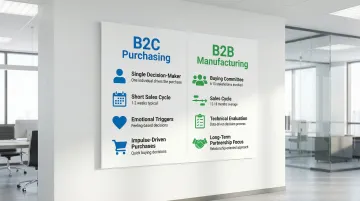
- B2B decisions involve buying committees of 6-10 people conducting months of research, unlike impulse-driven consumer purchases
- Manufacturing deals typically span 12-18 months, requiring branding that conveys reliability and expertise throughout lengthy evaluation periods
- Your brand must speak to engineers, procurement specialists, and C-suite executives simultaneously, each evaluating different criteria
- Manufacturing brands demonstrate technical competence, operational reliability, and long-term partnership potential—not emotional triggers
Key Elements of Manufacturing Brand Identity
Logo and Visual Identity System
Manufacturing logos must balance technical credibility with memorability while functioning across diverse applications—from laser-etched metal and safety signage to digital platforms and embroidered uniforms. Your visual identity becomes the first signal of quality and reliability to potential partners and customers.
Color palette considerations:
- Visibility: Colors must remain legible in manufacturing environments under various lighting conditions
- Safety compliance: Adherence to ISO 3864 and ANSI Z535 standards for safety colors (yellow for caution, red for danger, blue for mandatory actions)
- Differentiation: Strategic color choices that distinguish you from competitors while respecting industry conventions
Typography and Communication Design
Typography choices convey precision, reliability, or innovation depending on brand positioning. Sans-serif fonts like Helvetica or Arial prioritize legibility in technical contexts, particularly at small sizes and on digital screens. These choices extend beyond your logo to every written touchpoint.
Technical documentation impacts brand perception significantly. Customers place substantial value on high-quality product content before completing purchases. Your spec sheets, manuals, and data presentations become brand touchpoints requiring consistent visual treatment that reinforces professionalism and expertise.
Product Design Language
Your visual identity extends into physical products. Consistent design elements across product lines create family resemblance and brand recognition:
- Form language: Shared design principles, edge treatments, and consistent proportions
- Surface treatments: Consistent material finishes, textures, and color applications
- Interface patterns: Unified control layouts, display designs, and interaction models
The challenge lies in balancing functional requirements with brand identity. Industrial equipment must perform reliably under demanding conditions, but design choices in non-critical areas—housing shapes, control panel layouts, color accents—communicate brand identity without compromising function.
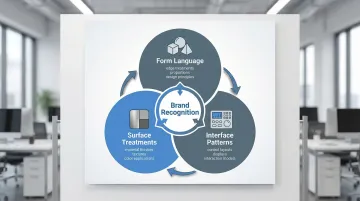
For climate tech companies building hardware—whether carbon capture systems, EV charging infrastructure, or renewable energy equipment—these design principles apply just as powerfully as they do for traditional manufacturing.
Physical Environments and Touchpoints
Facilities, showrooms, trade show booths, and equipment installations serve as three-dimensional brand expressions. These physical spaces show your commitment to quality and attention to detail.
Manufacturers often overlook these touchpoints:
- Packaging and shipping materials: First physical interaction with your products
- Fleet vehicles: Mobile brand ambassadors in industrial areas
- Uniforms and safety equipment: Human touchpoints carrying your brand
- Signage and wayfinding: Environmental graphics that reinforce brand presence
The Industrial Design Process for Brand Building
Discovery and Brand Strategy Foundation
Research establishes the foundation for every design decision. For climate tech and deep tech companies, this discovery phase uncovers both technical differentiation and mission-driven brand attributes.
Company assessment:
- Heritage and evolution
- Technical capabilities and differentiators
- Cultural values and operational principles
Market analysis:
- Target customer values and pain points
- Competitive landscape and positioning gaps
- Industry trends and emerging opportunities
Stakeholder research:
- Internal interviews to uncover authentic brand attributes
- Customer research to identify perception gaps
- Partner feedback on market positioning
Visual Brand Language Development
Once strategy is clear, the next step translates brand positioning into visual design principles.
Design principles documentation:
- Form language rules (geometric systems, proportions, transitions)
- Material palette (metals, plastics, composites, finishes)
- Color systems (primary, secondary, accent, safety colors)
- Graphic systems (typography, iconography, data visualization)
Reference frameworks:
- Mood boards establishing aesthetic direction
- Competitive analysis showing differentiation opportunities
- Application examples demonstrating flexibility
Application Across Touchpoints
The visual brand language scales across every customer touchpoint:
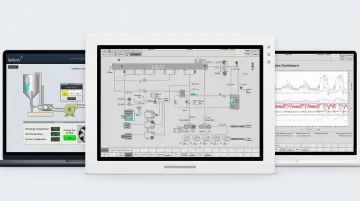
Product interfaces: Design systems for software platforms, dashboard layouts, data visualization standards
Marketing materials: Templates for pitch decks, one-pagers, case studies, and trade show collateral
Digital presence: Website design systems, social media guidelines, email templates, and investor presentation formats
Physical spaces: Event booth specifications, office environments, and demo setups
For innovation-driven companies, brand guidelines balance technical credibility with approachability—ensuring designs work across investor meetings, customer demos, and industry conferences.
Testing and Refinement
Validation confirms the brand connects with the right audiences:
- Customer feedback: Prototype testing with key accounts
- Trade show testing: Real-world engagement metrics and qualitative feedback
- Stakeholder alignment: Internal validation that the brand reflects company values
- Competitive assessment: Differentiation testing against key competitors
Refinement balances practical constraints—budget, timelines, technical feasibility—with brand integrity, ensuring designs work across contexts without dilution.
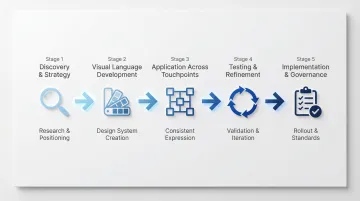
Implementation and Governance
Rollout strategies for tech companies typically follow a phased approach:
Phase 1: High-visibility touchpoints (website, trade show presence, new product launches)
Phase 2: Marketing materials and documentation updates
Phase 3: Product interface updates as development cycles allow
Phase 4: Event presence and physical space updates
Training ensures internal teams apply guidelines consistently across touchpoints. Brand stewardship—whether through internal champions or agency partners like What if Design—maintains integrity as organizations scale.
Case Studies: Powerful Manufacturing Brands
The following case studies show how leading manufacturers use design systems and brand consistency to strengthen market position and operational efficiency.
Schneider Electric: Global Consistency
When Schneider Electric implemented a comprehensive Brand Standards Manual, they solved a critical challenge: maintaining brand coherence across 100+ countries.
The manual provides strict criteria for graphic and editorial style, projecting a unified "One Schneider Electric" identity.
How they did it:
- Built centralized brand governance with clear, enforceable standards
- Applied design system across every customer touchpoint systematically
- Used consistency to reinforce their position as a global energy management specialist
While Schneider focused on consistency, Ørsted used design to signal transformation.
Ørsted: Repositioning Through Design
Ørsted (formerly DONG Energy) transitioned from a fossil-fuel-heavy utility to a global green energy leader. Their rebrand wasn't cosmetic—the visual identity now strictly aligns with their vision of a world running entirely on green energy.
The transformation approach:
- Authentically aligned business strategy with brand identity (not just a logo change)
- Created clear visual differentiation from traditional energy companies
- Applied new system consistently across investor relations, media, and customer touchpoints
Design Systems at Scale
Companies like Siemens and Bosch Rexroth use comprehensive design systems to unify vast product portfolios. When users encounter the same interface patterns across hundreds of products, training costs drop and adoption accelerates.
What makes these systems work:
- Design language scales across hundreds of products without losing coherence
- Governance balances central control with team-level innovation flexibility
- UX consistency becomes a measurable competitive advantage in customer retention
Challenges and Solutions in Industrial Branding
Challenge 1: "We're B2B, Brand Doesn't Matter"
This mindset ignores hard data. Brand strength directly influences partnership decisions, talent recruitment, and premium pricing ability. B2B companies with strong brands outperform weak-branded competitors by approximately 20%.
Solution: Demonstrate ROI through concrete metrics:
- Shortened sales cycles and improved win rates
- Ability to command price premiums
- Attraction of top engineering talent
- Facilitation of strategic partnerships
Challenge 2: Balancing Technical Requirements with Aesthetics
Engineers often resist design input, viewing aesthetics as compromising function.
The fix: Early collaboration between engineers and designers sets non-negotiable functional requirements before exploring form.
This approach identifies opportunities where aesthetics don't compromise performance:
- Housing shapes and enclosure design
- Color applications and surface treatments
- Interface layouts and control positioning
Critical technical constraints remain respected throughout.
Challenge 3: Maintaining Consistency Across Diverse Operations
Global manufacturing operations with multiple product lines struggle to maintain brand consistency.
Solution: Comprehensive brand guidelines with CAD templates, material specifications, and clear application examples. Centralized brand portals and design systems with governance models ensure teams can access current standards and apply them correctly.
Working with specialized design partners who understand manufacturing contexts provides ongoing stewardship.
Measuring Brand Impact in Manufacturing
Quantitative KPIs
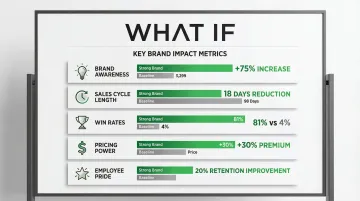
Track these core metrics to measure brand strength:
- Brand awareness: Recognition and consideration rates in target markets through surveys and market research
- Sales cycle length: Strong brands shorten decision timelines and accelerate deal closure
- Win rates: Known brands win 81% vs. 4% for unknown brands in competitive situations
- Pricing power: Strong brands command 30% price premiums over functionally similar alternatives
- Employee metrics: Pride scores, retention rates, and talent acquisition success
Qualitative Measures
Numbers tell part of the story. Qualitative feedback reveals how your brand resonates in the market.
Regular customer perception studies track how buyers view your technical competence, reliability, and innovation leadership. Trade show engagement—booth traffic quality, conversation depth, and lead generation—shows competitive positioning in action.
Media coverage quality matters more than quantity. Track the tone of press mentions, analyst reports, and industry recognition. Partner feedback from distributors, integrators, and strategic allies reveals how effectively your brand messaging translates through channels.
Establishing Baseline and Tracking
Establish baseline metrics across these dimensions before any rebranding effort. This creates the foundation for measuring progress.
Track improvements quarterly to demonstrate ROI and justify continued investment. Brand health metrics should include awareness, positioning clarity, and delivery perception. When What if Design partners with climate tech companies on brand strategy, we help establish these measurement frameworks early to track brand evolution over time.
Working with Design Partners for Manufacturing Brands
When to Consider External Expertise
Manufacturers should consider external design partners when:
- Launching new brands or repositioning existing ones
- Entering new markets requiring fresh perspectives
- Lacking internal design capabilities or bandwidth
- Needing specialized expertise in B2B contexts
- Seeking objective assessment of current brand effectiveness
What to Look for in Design Partners
Look for partners who bring:
- Experience with technical constraints, long sales cycles, and B2B decision-making processes
- Ability to connect design decisions to business objectives, not just create attractive visuals
- Skill in making complex technical offerings comprehensible and compelling to diverse audiences
- Commitment to discovering and expressing your actual differentiators rather than applying generic templates
- Actionable guidelines, templates, and ongoing guidance rather than just delivering final files
What if Design's Approach
These principles guide how What if Design approaches manufacturing partnerships.
What if Design works with purpose-driven manufacturers and climate tech companies to translate complex technical offerings into compelling brand narratives. Their experience includes helping emerging manufacturers establish credibility and differentiate in competitive markets.
The team focuses on authentic brand expression that resonates with technical decision-makers while supporting the rapid growth timelines typical of innovative manufacturing companies.
Frequently Asked Questions
What makes manufacturing brand identity different from consumer brands?
Manufacturing brands serve technical decision-makers evaluating long-term partnerships, not impulse buyers. They must demonstrate capability and reliability through consistent design rather than trigger emotional purchases.
How do industrial design and brand identity work together?
Product design creates tangible brand experiences customers interact with daily, while visual identity provides recognition across touchpoints. Both must align—if your products feel utilitarian but your marketing looks premium, the disconnect erodes trust.
What are the key elements of a strong manufacturing brand?
Key elements include a versatile visual identity system, consistent product design language, clear messaging demonstrating technical expertise, authentic company values, and strategic differentiation that matters to customers.
How can small manufacturers compete with established brands?
Find authentic differentiation through specialization in specific applications or industries. Tell compelling origin stories that highlight your unique approach or expertise. Invest strategically in high-impact touchpoints like trade show presence and technical documentation rather than trying to match larger competitors across all channels.
How long does it take to build a manufacturing brand identity?
Brand strategy takes 4-8 weeks, visual identity creation 8-12 weeks, and full implementation 6-12 months. However, brand building is ongoing—initial work establishes the foundation, but refinement continues as you gather market feedback.
Why is brand identity especially important for climate tech manufacturers?
Climate tech companies must establish credibility quickly in markets where trust determines adoption. Strong brand identity differentiates you in crowded sustainability markets, attracts mission-aligned customers and talent, and signals stability for long-term partnerships.