Introduction
Sustainability associations stand at the forefront of the renewable energy transition, yet many struggle to amplify their message in an increasingly crowded landscape.
These organizations possess deep expertise and mission-driven passion, but face unique marketing challenges: limited budgets, diverse stakeholder groups spanning members, policymakers, and the public, and the delicate balance between advocacy and membership growth.
The stakes are high. Only 11% of association executives believe their value proposition is "very compelling," while 63% of missed member sign-ups stem from prospective members not understanding the value of joining.
This communications gap directly limits the capacity to advance the renewable energy agenda.
To bridge this gap, sustainability associations need marketing strategies designed for their unique position—advocacy-driven, member-focused, and mission-critical.
This guide presents seven proven marketing strategies tailored specifically for sustainability associations working in renewable energy, from content marketing and digital community building to data-driven storytelling and coalition partnerships.
TLDR
- Grow membership, policy influence, and funding through strategic marketing aligned with association goals
- Position your association as an authority with research reports, policy briefs, and educational resources
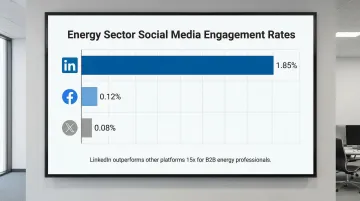
- LinkedIn delivers 1.85% engagement rates for energy content, outperforming Facebook and Twitter combined for B2B influence
- Strategic coalition partnerships expand reach and share resources beyond immediate membership
- Use data visualization and impact reporting to boost member retention rates by 20-30%
Why Marketing Matters for Sustainability Associations
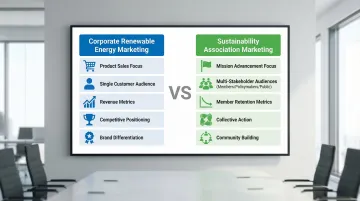
Unlike commercial renewable energy companies focused on product sales, sustainability associations face a different challenge. They must market simultaneously to current members, prospective members, policymakers, media, and the general public. This multi-audience complexity requires sophisticated strategies that balance education, advocacy, and community building.
Effective marketing directly supports core association goals. Organizations demonstrating higher innovation levels—including in their marketing approaches—consistently report better membership growth.
The correlation is clear: associations that introduce new benefits, systems, or marketing tactics outperform those maintaining the status quo.
The financial impact is measurable. Associations with strong marketing programs see higher member retention rates (median 84% renewal rate), greater policy influence, and more sustainable funding streams.
Yet many associations still view marketing as "too commercial" for mission-driven work—a misconception that limits their impact.
Understanding this distinction matters. Association marketing differs fundamentally from corporate marketing, focusing on:
- Education: Translating complex renewable energy data into accessible insights
- Advocacy: Mobilizing members and influencing policy decisions
- Community building: Creating connections among renewable energy professionals
- Collective action: Coordinating industry responses to regulatory challenges
The Solar Energy Industries Association (SEIA) shows this approach in action. Representing approximately 1,200 member companies, SEIA uses research, advocacy, events, and media to grow both influence and membership.
Their comprehensive strategy demonstrates that strategic marketing isn't optional—it's essential infrastructure for advancing the renewable energy transition.
Top 7 Renewable Energy Marketing Strategies for Sustainability Associations
Strategy 1: Content Marketing & Thought Leadership
Research shows that 73% of decision-makers view an organization's thought leadership as more trustworthy than its marketing materials.
For sustainability associations, proprietary research and data-driven insights create a competitive advantage that attracts members and influences policy.
Establishing Authority Through High-Value Content:
Leading renewable energy associations leverage content to shape industry dialogue:
- SEIA's U.S. Solar Market Insight Report (co-published with Wood Mackenzie) provides critical data on installations, costs, and forecasts, becoming the definitive source for solar industry intelligence
- American Clean Power's CleanPowerIQ offers sector-specific analyses and a comprehensive project database that informs business decisions
- IREC's Solar Industry Diversity Study establishes leadership in workforce development through comprehensive diversity, equity, and inclusion data
Creating an Effective Content Calendar:
Develop content that addresses member pain points, policy developments, and industry innovations:
- White papers analyzing renewable energy trends and emerging technologies
- Policy briefs translating complex legislation into actionable intelligence
- Educational resources explaining technical concepts for non-expert stakeholders
- Research reports establishing your association as the data authority in your subsector
Position association leadership as go-to expert sources by consistently producing content that media and policymakers cannot find elsewhere.
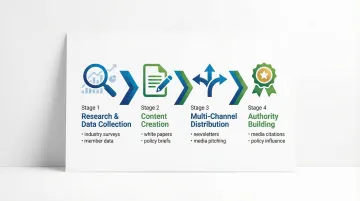
Once you've created valuable content, strategic distribution ensures it reaches the right audiences.
Distribution Channels That Maximize Reach:
- Newsletter optimization: Community digest emails achieve 56% open rates compared to 36% for typical association emails
- Resource centers: Dedicated website sections housing downloadable reports and toolkits
- Media pitching: Proactive outreach to journalists covering renewable energy policy
- Op-eds and guest articles: Placement in industry publications and mainstream media
- Member communications: Regular distribution through member newsletters and forums
Strategy 2: Digital Community Building & Social Media Engagement
Building vibrant online communities strengthens member connections while expanding reach cost-effectively.
LinkedIn dominates for energy professionals, achieving a 1.85% engagement rate—significantly outperforming Facebook (0.12%) and Twitter (0.08%).
Platform Strategy for Maximum Impact:
Focus resources where renewable energy professionals actually engage:
- LinkedIn: The undisputed primary channel for B2B influence in the renewable sector, with engagement rates 28% higher than previous years
- Member forums: SEIA's "The Sphere" provides members-only access to solar data, maps, and industry resources, creating exclusive value
- Professional networks: Online communities average 563 unique logins and 68 contributors monthly, with mature communities (5+ years) seeing even higher engagement
Social Media Tactics for Associations:
- Share member success stories highlighting renewable energy project implementations
- Live-tweet from industry conferences and policy hearings
- Create shareable infographics visualizing clean energy data and policy impacts
- Highlight policy wins with clear attribution to member advocacy efforts
- Post regulatory updates with analysis of business implications
Encouraging User-Generated Content:
Empower members to amplify your message:
- Hashtag campaigns: Create branded hashtags for industry events and policy initiatives
- Member spotlights: Regular features showcasing member companies and projects
- Social media toolkits: Provide sample posts, graphics, and messaging for members to share
- Unified voice campaigns: American Clean Power provides "Social Press Kits" with pre-made content, helping the industry speak with one voice during critical policy moments
Strategy 3: Brand Identity & Visual Storytelling
Strong visual branding builds credibility and makes complex renewable energy concepts accessible. Users form first impressions of websites in just 50 milliseconds.
Why Visual Branding Matters:
Cohesive visual identity establishes trust with members, policymakers, and funders. A functional, user-friendly website makes organizations appear more trustworthy, directly influencing membership conversion and sponsor engagement.
Essential Brand Elements:
- Logo and color palette: Consistent visual identity across all touchpoints
- Infographic templates: Standardized formats for data visualization
- Presentation decks: Professional templates for member events and policy briefings
- Modern website: Clear navigation, intuitive UX, and mobile-responsive design
- Brand guidelines: Comprehensive documentation ensuring consistency
Strategic Partnership for Visual Excellence:
Many sustainability associations operate with lean teams and limited design resources. Partnering with agencies that specialize in climate and clean energy sectors can create high-impact visual assets efficiently.
What if Design works specifically with sustainability associations and climate tech organizations to translate complex renewable energy concepts into compelling visual narratives. With experience across climate-focused organizations, they bring sector knowledge that ensures brand assets resonate with members, policymakers, and funders while maintaining the technical credibility that energy professionals expect.
Strategy 4: Strategic Partnerships & Coalition Marketing
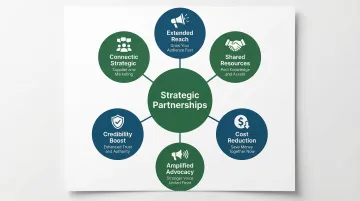
Associations multiply their marketing impact by forming coalitions with complementary organizations. Strategic partnerships extend reach, share costs, and amplify advocacy efforts.
Partnership Models That Work:
- Co-branded research reports: SEIA's partnership with Wood Mackenzie combines industry reach with analytical rigor
- Shared conference sponsorships: Split costs while accessing each other's audiences
- Cross-promotional newsletter features: Introduce your association to partner organizations' members
- Coordinated social media campaigns: Unified messaging during key policy moments
Coalition Marketing in Action:
American Clean Power strengthens bipartisan impact by partnering with diverse organizations across industries and regions. Their "Celebration of American Energy" event partnered with 24 organizations, drawing 500+ attendees including policymakers and press. This demonstrated ACP's role as a unifying force in the industry.
Identifying Ideal Partners:
Look for organizations with:
- Shared mission but non-competing audiences
- Complementary expertise (policy focus vs. technical focus)
- Geographic or sector specialization that extends your reach
- Similar values and professional standards
Structure partnership agreements with clear attribution, mutual benefit expectations, and defined success metrics.
Strategy 5: Event Marketing & Member Engagement
Events remain powerful conversion engines for associations. Pre-COVID research indicated that free trial memberships tied to events achieved 50% conversion rates. While event dynamics have shifted, hybrid strategies offering clear pathways from participation to membership remain vital.
Event Types That Drive Engagement:
- Annual conferences: RE+ (SEIA and SEPA) doubled attendance in four years, hosting 40,000+ professionals in 2024
- Webinar series: Cost-effective education with broad geographic reach
- Policy briefings: Targeted sessions for members to understand regulatory changes
- Regional networking events: California Solar & Storage Association held 21 chapter events with 40-100 attendees each
Pre-Event Marketing Tactics:
- Early-bird campaigns creating urgency for registration
- Speaker announcements highlighting industry leaders and policymakers
- Member testimonials from past events demonstrating value
- Targeted outreach to prospective members matching attendee profiles
Post-Event Marketing Strategies:
- Session recordings as gated content for lead generation
- Event highlight reels for social media promotion
- Follow-up campaigns converting attendees into members
- Surveys gathering feedback to improve future events
Strategy 6: Policy Advocacy Communications
Strategic advocacy communications amplify policy influence by mobilizing members, shaping media coverage, and providing decision-makers with credible data.
Mobilizing Members for Policy Action:
- Action alerts: Targeted campaigns instructing members how to contact legislators
- Lobby days: CALSSA's 2023 event brought 300 participants for 100+ legislative meetings
- Regulatory comment campaigns: Coordinated member responses to proposed rules
- Legislative tracking: Regular updates on bills affecting renewable energy
Effective Advocacy Messaging:
Frame policy issues to resonate with different stakeholder groups:
- Business audiences: Emphasize job creation, economic development, and competitive advantage
- Environmental advocates: Highlight emissions reductions and climate impact
- General public: Focus on energy security, cost savings, and community benefits
Action Alert Performance:
Energy professionals respond strongly to urgent policy calls. The Energy & Natural Resources sector saw action rates peak at 16.9% in 2024. Campaigns targeting both federal and state levels achieved 9.5% action rates.
Building Media Relationships:
Proactive media outreach ensures association voices are included in renewable energy policy coverage. American Clean Power's Green Hydrogen Framework campaign drove significant mainstream media coverage, helping advance their policy position through strategic journalist relationships.
Strategy 7: Data-Driven Storytelling & Impact Reporting
Transparent, data-rich impact reports demonstrate value to current members, attract new members, secure grants, and build credibility with media and policymakers.
Transforming Data Into Compelling Stories:
- Annual impact reports: Document policy wins, membership growth, and industry advancement
- Interactive dashboards: Real-time data on member engagement, project tracking, and industry metrics
- Member success metrics: Quantify the business value members receive from association resources
- Policy win trackers: Visualize legislative victories and regulatory achievements
Visualization Techniques:
- Comparison infographics: Before/after policy impacts on renewable energy deployment
- Timeline graphics: Clean energy growth trajectories and milestone achievements
- Interactive maps: Geographic distribution of member projects and installations
- Video testimonials: Stakeholder perspectives on association impact
Best Practices from Leading Associations:
SEIA's Solar & Storage Supply Chain Dashboard provides critical industry data that members cannot easily generate themselves, creating unique value. American Clean Power's CleanPowerIQ Project Database offers the most complete database of solar, storage, and wind projects, serving as a core membership benefit.
Impact reporting serves multiple strategic goals simultaneously, proving that membership advances both professional and industry objectives—the key to loyalty and retention.
How to Choose & Implement the Right Strategies for Your Association
Not every association should implement all seven strategies at once. Prioritize based on your organization's size, budget, staff capacity, and primary goals.
Use this framework to identify which strategies align with your association's current objectives:
Assessment Framework
For membership growth focus:
- Prioritize content marketing and thought leadership
- Invest in event marketing with clear conversion pathways
- Develop data-driven impact reporting demonstrating member ROI
For policy influence focus:
- Emphasize advocacy communications and action alert systems
- Build strategic partnerships and coalitions
- Create thought leadership content targeting policymakers
For public education focus:
- Social media engagement and digital community building
- Accessible visual storytelling and infographics
- Partnerships with complementary organizations to extend reach
Implementation Approach
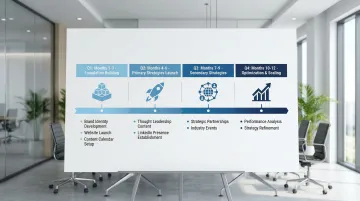
Once you've identified your priorities, phase implementation strategically. Start with 2-3 core strategies and execute them well rather than spreading resources too thin:
- Months 1-3: Establish foundation (brand identity, website optimization, content calendar)
- Months 4-6: Launch primary strategies (thought leadership content, LinkedIn presence)
- Months 7-9: Add secondary strategies (partnerships, event marketing)
- Months 10-12: Optimize and scale based on performance data
Creating Your 12-Month Marketing Roadmap
Align strategies with your association's calendar milestones:
- Q1: Annual conference marketing, membership renewal campaigns
- Q2: Policy advocacy during legislative sessions, new member acquisition
- Q3: Industry event participation, research report releases
- Q4: Year-end impact reporting, strategic planning for next year
Measuring Marketing Success for Sustainability Associations
Define success metrics that align with your association's strategic priorities, not generic vanity metrics.
Key Performance Indicators by Strategy:
| Strategy | Primary KPIs | Secondary KPIs |
|---|---|---|
| Content Marketing | Report downloads, media citations | Website traffic, time on page |
| Social Media | LinkedIn engagement rate (1.85% benchmark) | Follower growth, share rate |
| Brand Identity | Website conversion rate | Bounce rate, session duration |
| Partnerships | Joint event attendance | Cross-promotional reach |
| Event Marketing | Attendee-to-member conversion | Registration numbers, satisfaction scores |
| Advocacy | Action alert response rate (16.9% benchmark) | Legislative wins, media mentions |
| Impact Reporting | Member retention rate (84% benchmark) | Renewal rate, average tenure |
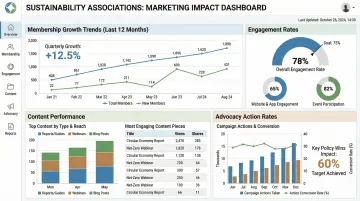
Setting Up Tracking Systems:
Use tools associations likely already have:
- Google Analytics: Website performance, traffic sources, conversion tracking
- Email platform analytics: Open rates, click-through rates, action rates
- CRM systems: Member journey tracking, engagement scoring, retention analysis
- Social media analytics: Platform-specific engagement metrics, audience demographics
These tracking systems provide the data foundation for meaningful stakeholder communication.
Reporting to Stakeholders:
Regular reporting to association boards and members demonstrates how marketing investments support mission advancement. Focus on outcomes, not activities:
Shift from "We sent 12 newsletters" to "Newsletter campaigns drove 47 new member inquiries and 23 conversions."
Shift from "We published 4 research reports" to "Our research was cited in 15 media articles and 3 congressional testimonies."
Conclusion
Effective marketing isn't a luxury for sustainability associations—it's essential infrastructure for advancing the renewable energy transition. The data is clear: associations with strong marketing programs see higher member retention, greater policy influence, and more sustainable funding.
The challenge isn't whether to invest in marketing, but how to do so strategically with limited resources. By focusing on 2-3 core strategies that align with your association's unique goals, you can build marketing capacity that amplifies impact without overwhelming lean teams.
View marketing as mission-critical work that grows your membership base, influences renewable energy policy, and educates stakeholders.
Build this capacity through staff training, technology tools, or strategic partnerships with agencies specializing in climate and sustainability sectors.
For associations ready to elevate their brand presence, What if Design offers strategic design services tailored to climate tech and sustainability organizations. We help translate complex renewable energy concepts into clear visual communication—from brand strategy and website development to pitch decks that resonate with policymakers, members, and funders alike.
Frequently Asked Questions
How are renewable energy products marketed?
Renewable energy products are marketed through digital channels (SEO, content marketing, social media), direct sales outreach, partnerships with installers and distributors, and education-focused campaigns. Successful strategies combine technical credibility with compelling ROI demonstrations.
What makes marketing for sustainability associations different from corporate renewable energy marketing?
Association marketing focuses on mission advancement, member value, policy advocacy, and collective action rather than product sales. This requires different metrics, messaging approaches, and stakeholder engagement strategies than corporate marketing.
What budget should sustainability associations allocate to marketing?
Associations should aim for 5-10% of operating budget for marketing, with smaller organizations starting at 3-5%. The median marketing budget is approximately $5,620, prioritizing high-impact digital channels.
How can small sustainability associations compete with larger organizations in marketing?
Smaller associations leverage niche expertise, authentic member relationships, and targeted content to build authority in specific renewable energy subsectors. Focus on depth over breadth—become the definitive voice in your specialization.
What are the biggest marketing mistakes sustainability associations make?
Common pitfalls include inconsistent branding, speaking only to existing members, neglecting impact reporting, failing to leverage member advocates, and treating marketing as optional. Additionally, 75% of associations lack written engagement plans.
How long does it take to see results from association marketing efforts?
Brand awareness campaigns show results in 3-6 months, content marketing and SEO require 6-12 months, while membership growth and policy influence may take 12-18 months of consistent effort to demonstrate significant impact.