You've built a novel technology. You've closed a seed round. You're heading into a major investor demo or industry conference in six weeks, and your brand looks like it was put together over a weekend. The website still reads like a research paper. The pitch deck visuals don't match. And the messaging hasn't caught up to where the company actually is.
This isn't a design problem. It's a positioning and signal clarity problem. As a climate tech or deep-tech founder, your brand presence directly affects whether investors, enterprise buyers, and channel partners take the next meeting. A credibility gap at the brand level creates friction at every stage of the funnel.
This guide covers the 13 best design sprint agencies for rapid branding transformation in 2026, with honest notes on what each one is built for, who they serve best, and how to choose the right partner given your company's stage and timeline. In a market where AI-assisted design tools have compressed execution timelines across the industry, the agencies delivering the most value in 2026 are those that combine sprint methodology with deep domain expertise — not just faster production.
TLDR
- Compress 3-6 months of branding work into focused 3-5 day sprint workshops
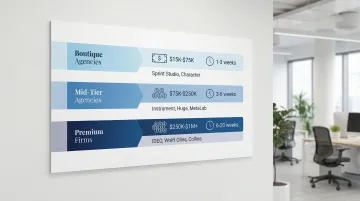
- Featured agencies range from boutique specialists ($15K-$75K) to global firms ($250K-$1M+)
- Top criteria: sprint methodology expertise, delivery speed, portfolio quality, measurable results
- Reduce time-to-market by up to 75% through rapid validation and user testing
What is a design sprint and why it matters for branding
A design sprint is a time-constrained, structured workshop, typically 3-5 days, that brings together cross-functional teams to solve critical branding challenges through rapid prototyping and validation.
Originally developed at Google Ventures, the methodology compresses strategic thinking, creative development, and user testing into a single intensive week.
How sprints differ from traditional branding
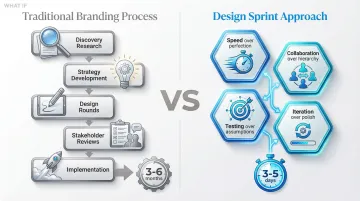
Traditional branding processes follow sequential phases: lengthy discovery research, strategy development, multiple design rounds, stakeholder reviews, and implementation. This linear approach often stretches timelines to 3-6 months or longer.
Design sprints restructure this model by prioritizing speed over perfection — time constraints force clarity rather than endless deliberation. Cross-functional teams work together simultaneously rather than in sequence, collapsing weeks of back-and-forth into a single focused engagement. Real user feedback validates concepts before full investment, grounding decisions in evidence rather than assumption. And rapid refinement replaces extended revision cycles: the goal is a testable direction, not a polished final product.
For a deep-tech startup with eight weeks before a Series A close, the difference is concrete. A traditional branding engagement would still be in discovery at week four. A sprint compresses positioning work into the first week — leaving the remaining seven weeks to implement, refine, and build the collateral that shows up in investor materials and the first enterprise sales conversations.
Key business benefits
When you run design sprints, you consistently see dramatic reductions in decision-making time compared to traditional methods.
IBM's design thinking research documented that these practices can cut design and implementation times by 75%, while Google Ventures reported average ROI of 5-10x on their sprint investments.
If you're building a climate tech or deep-tech company, the methodology delivers meaningful advantages specific to your situation. Take a carbon capture startup preparing for its Series A close: using a sprint, they validated three positioning directions in one week, emerged with a messaging framework their lead investor referenced directly in the term sheet call, and avoided two months of sequential agency work. Compressed timelines mean you launch in weeks instead of months — critical when a funding announcement or conference appearance is driving the schedule. Validating positioning and visual concepts with real users before committing full resources reduces risk, which matters when your runway is finite. Bringing decision-makers into the process early creates alignment across your investors, enterprise buyers, and channel partners who often have conflicting priorities. And focused timelines translate directly to lower overall project costs compared to drawn-out sequential engagements.
Typical branding sprint outcomes
A well-executed design sprint produces tangible deliverables: validated brand positioning and messaging framework, tested visual identity concepts including logo, color palette, and typography, and a brand personality definition with tone guidelines. You also get prototype mockups showing brand application across touchpoints, user feedback synthesis identifying what resonates with target audiences, and an implementation roadmap with prioritized next steps. When these deliverables are validated before you commit full resources, you enter investor conversations and enterprise sales cycles with positioning that has been tested against real feedback — not just internal conviction.
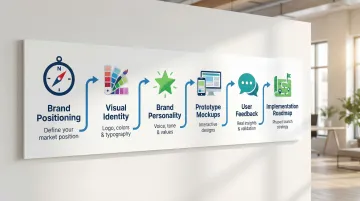
13 best design sprint agencies for rapid branding transformation in 2026
We selected these agencies based on proven design sprint expertise, delivery speed, portfolio strength, and documented ability to drive measurable branding transformation for clients across different stages and industries.
What if Design
What if Design is a remote-first design agency founded in 2020, specializing in full-service branding for climate tech, sustainability, and purpose-driven organizations across San Francisco and Bangalore. The agency delivers complete brand transformation from strategy to implementation in 4-6 weeks, with specific expertise in translating complex technical narratives into investor-ready brand systems.
The agency turns around specific deliverables in as little as 48 hours and completes comprehensive brand systems in 4-6 weeks. Their full-service capabilities run from narrative development through brand guidelines and press kits, with deep familiarity across climate tech verticals including carbon capture, hydrogen, grid modernization, and clean energy infrastructure.
The agency has completed notable climate tech transformations, including a comprehensive brand and digital ecosystem for Susteon, a carbon capture and hydrogen production company, and brand development for companies backed by Accel Partners and other leading climate VCs.
| Specialization | Climate tech, sustainability, B2B tech, purpose-driven startups |
| Typical timeline | 4-6 weeks for complete brand identity; rapid iterations available within 48 hours for specific deliverables |
| Pricing range | Starting at $30,000 for comprehensive branding packages; flexible engagement models for startups |
AJ&Smart
AJ&Smart is a Berlin-based agency that pioneered design sprint training and facilitation, working with companies like Google, Slack, and LEGO to run brand-focused sprints. As the official training partner of Jake Knapp (creator of the Design Sprint methodology), they offer direct lineage to the original framework.
Their facilitators are certified directly by the methodology creator, running Design Sprint 2.0 frameworks compressed to 4 days. They've built strong virtual sprint capabilities through distributed team engagements and have trained more than 50,000 professionals worldwide.
AJ&Smart's approach emphasizes facilitation quality. They don't just run sprints; they teach you how to build the methodology into your ongoing processes — which matters when your positioning needs to evolve as fast as your fundraising conversations do.
| Specialization | Design sprint facilitation, brand strategy workshops, innovation consulting |
| Typical timeline | 4-5 day intensive design sprints; 2-3 week follow-up implementation |
| Pricing range | $50,000-$150,000 for facilitated sprints with branding focus |
IDEO
IDEO is a global design consultancy with offices worldwide, known for pioneering human-centered design methodology that includes sprint-based branding work. Founded in Palo Alto, IDEO has worked with clients including Apple and Ford, bringing deep research capabilities to every engagement.
IDEO brings multi-disciplinary teams of strategists, designers, and researchers to every engagement, with a proven track record with Fortune 500 companies and a methodology that tightly integrates branding with product and service design.
IDEO doesn't run standalone sprint engagements. Their methodology incorporates sprint principles within longer, research-led processes, which makes them better suited to complex transformations where deep strategic thinking matters more than speed alone — and where the brand decision needs to hold up under scrutiny from enterprise procurement teams with long evaluation cycles. Their documented approach to sprints emphasizes diverse perspectives and rigorous user testing.
| Specialization | Human-centered design, brand strategy, innovation consulting, experience design |
| Typical timeline | 4-8 weeks for sprint-based branding projects |
| Pricing range | $200,000-$500,000+ for comprehensive engagements |
Instrument
Instrument is a Portland and New York-based digital brand agency that combines design sprints with strong digital execution for brands like Google, Nike, and Sonos. Their value lies in integrating brand strategy with digital product design, so sprint outcomes translate directly into production-ready digital experiences.
They bring rapid prototyping capabilities using modern web technologies, expertise in interactive brand experiences, and a portfolio that demonstrates how strategic brand work scales across digital touchpoints.
Instrument excels at translating brand strategy into tangible digital products. This makes them particularly useful when you need brand development and immediate digital implementation without managing a handoff between separate creative and engineering teams — meaning your digital touchpoints are deal-ready at the same time your brand strategy is finalized.
| Specialization | Digital branding, web design, brand strategy, interactive experiences |
| Typical timeline | 3-6 weeks for sprint-based brand and digital projects |
| Pricing range | $100,000-$300,000 for integrated brand and digital work |
Frog Design
Frog Design is a global innovation firm with 50+ years of experience, offering sprint-based branding services that integrate strategy, design, and technology for enterprise clients. Part of Capgemini, Frog brings enterprise-scale capabilities while maintaining a design-led approach.
Frog combines global reach with local expertise across major markets, proprietary sprint frameworks adapted for enterprise complexity, and end-to-end capabilities from brand strategy through technical implementation.
Frog is particularly strong with large organizations where rebranding requires navigating multiple business units, stakeholder groups, or regional markets simultaneously — and where brand coherence across those units directly affects how enterprise buyers evaluate you in multi-stakeholder procurement processes.
| Specialization | Enterprise branding, digital transformation, innovation strategy |
| Typical timeline | 6-10 weeks for comprehensive sprint-based branding |
| Pricing range | $250,000-$750,000+ for enterprise engagements |
Sprint Studio
Sprint Studio is a specialized agency focused exclusively on design sprint methodology, helping startups and scale-ups rapidly develop and test brand concepts. Their exclusive focus on sprints creates lean team structures, streamlined processes, and accessible pricing.
Their deep expertise in early-stage company branding is paired with rapid iteration cycles that accommodate startup pivots and pricing models accessible to venture-backed companies with constrained budgets.
Sprint Studio understands the unique pressures you face as an early-stage startup: limited runway, the need for investor-ready materials, and the requirement to establish credibility quickly. Their approach prioritizes validation over visual polish, which means you avoid over-investing in brand elements before you've validated the positioning that will hold up in investor conversations and early enterprise sales calls.
| Specialization | Startup branding, rapid prototyping, brand validation, MVP branding |
| Typical timeline | 1-3 weeks for focused brand sprints |
| Pricing range | $25,000-$75,000 for startup-focused sprint packages |
Huge
Huge is a Brooklyn-based digital agency with global offices, known for combining design sprints with data-driven brand strategy for clients like Google, Unilever, and HBO. Their approach integrates analytics and user research directly into the sprint process, so decisions are validated by both qualitative feedback and quantitative data.
They bring sophisticated research and analytics capabilities, scalable brand systems designed for multi-channel deployment, and expertise in both B2C and B2B branding contexts.
Huge excels at creating brand experiences that perform measurably across digital touchpoints. Their methodology is particularly useful when you need evidence-based brand decisions tied to user behavior data rather than subjective creative judgment alone — which becomes especially valuable when you're presenting brand performance to enterprise buyers or justifying brand investment to your board.
| Specialization | Data-driven branding, digital experiences, brand strategy, UX design |
| Typical timeline | 4-8 weeks for sprint-based brand development |
| Pricing range | $150,000-$400,000 for comprehensive projects |
Ueno (historical reference)
Note: Ueno was acquired by Twitter in 2021 and is no longer operating as an external agency. Their work is referenced here as a notable example of bold, rapid brand development for high-growth tech companies, with a portfolio that included Google and Airbnb. Their approach demonstrated what sprint-based thinking could achieve when applied to ambitious consumer tech brands before the team was absorbed in-house.
Pentagram
Pentagram is the world's largest independent design consultancy with partner-led studios across major global cities. Each partner operates autonomously, offering rapid iteration and focused workshops for high-impact brand identity work, with notable portfolio projects including the Mastercard and Slack rebrands.
Every project gets partner-level involvement, meaning senior creative talent leads the work throughout — not a team of juniors with occasional senior reviews. They consistently produce brand systems with long shelf lives that hold up as companies scale, with a portfolio of iconic identity work spanning finance, technology, culture, and consumer brands.
Pentagram doesn't market their process as sprints, but their engagements incorporate focused workshops and rapid iteration, compressed into 6-12 week timelines rather than year-long transformations — which means your brand can be in-market in time for the partnership announcement or funding round that's driving your schedule.
| Specialization | Brand identity, visual systems, corporate rebranding, cultural branding |
| Typical timeline | 6-12 weeks for comprehensive brand identity projects |
| Pricing range | $200,000-$600,000+ for major brand work |
Collins
Collins is a New York-based independent brand agency founded by former Pentagram partner Brian Collins, known for transformative brand work using sprint-based methodologies. The agency has worked with major brands like Spotify and Facebook, focusing on bold repositioning rather than incremental brand refinement.
Their proprietary sprint frameworks are adapted for what they call "Convergence Era" branding, where physical and digital experiences overlap. The emphasis is on cultural relevance and positioning that challenges category conventions — built on a philosophy that incremental brand evolution rarely creates the signal shift a company needs.
Collins is best suited for established brands that need a clear repositioning, not just a visual refresh — particularly when your existing brand is creating friction in new market conversations or making it harder to win deals outside your legacy customer base.
| Specialization | Brand transformation, corporate identity, cultural branding, strategic positioning |
| Typical timeline | 8-16 weeks for transformational brand projects |
| Pricing range | $300,000-$800,000+ for comprehensive transformations |
Wolff Olins
Wolff Olins is a global brand consultancy with 50+ years of experience, with a track record working on brands like Google, Uber, and (RED) that redefined their categories. Their methodology combines strategic depth with creative ambition, and they are well known for work that challenges industry norms rather than following them.
Their global perspective combines cultural sensitivity across markets with a proven methodology for brands that need to differentiate from incumbents with decades of brand equity. They also bring deep experience in purpose-driven branding that aligns business strategy with demonstrable impact.
Wolff Olins is best suited for ambitious transformations requiring both strategic repositioning and visual reinvention at enterprise scale — particularly when the goal is to shift how an established enterprise is perceived in new market categories or by a new buyer audience.
| Specialization | Brand strategy, corporate identity, brand architecture, purpose-driven branding |
| Typical timeline | 10-20 weeks for strategic brand transformations |
| Pricing range | $400,000-$1,000,000+ for enterprise-level work |
MetaLab
MetaLab is a Victoria, BC-based design agency specializing in rapid brand and product design for tech companies, with clients including Slack, Coinbase, and Facebook. Their distributed team structure enables fast parallel workstreams, accelerating timelines beyond what single-timezone agencies can typically deliver.
They bring deep expertise in tech startup and scale-up brand needs, with a product-first branding approach that ensures brand systems work within actual product interfaces, not just in isolation. Their track record spans high-growth startups from Series A through IPO.
MetaLab builds brand systems with the architecture to scale as you grow, which matters when you're expecting to triple the team in 18 months and need brand assets that hold up in enterprise sales decks, partner co-marketing materials, and product interfaces without a redesign.
| Specialization | Tech startup branding, product design, web design, brand systems |
| Typical timeline | 2-4 weeks for focused brand sprints |
| Pricing range | $75,000-$200,000 for startup brand packages |
Character
Character is a San Francisco design agency co-founded by design sprint pioneer Jake Knapp (author of Sprint) and John Zeratsky. This direct lineage to the methodology's creator gives their process a clarity and focus that agencies trained secondhand often lack.
Their Foundation Sprint offering is a 2-day intensive designed specifically for early-stage companies needing to validate business and brand hypotheses before building. Character also operates as a venture firm, offering select founders free sprints in exchange for equity.
Their approach is founder-friendly, built for early-stage constraints, with a focus on validation and hypothesis testing rather than visual polish. This means they can translate an abstract startup vision into brand direction that holds up under investor scrutiny.
| Specialization | Startup branding, design sprints, brand validation, early-stage identity |
| Typical timeline | 2-4 weeks for sprint-based startup branding |
| Pricing range | $50,000-$150,000 for early-stage brand development |
How we evaluated these design sprint agencies
We evaluated each agency using a structured process that examines sprint expertise, portfolio quality, and proven delivery speed.
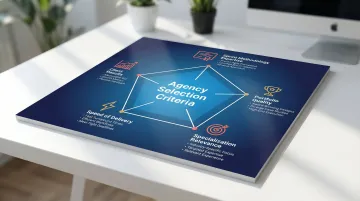
Core evaluation criteria
Sprint methodology expertise: Look for formal training, certifications, or direct lineage to sprint creators — Jake Knapp or the original Google Ventures team. Proprietary frameworks signal depth of understanding beyond just having run a few sessions, and facilitator expertise should be evident in how they describe handling disagreements and decision-making under time pressure.
Portfolio quality: Look at how clearly the agency articulates complex or technical brand positioning — not just visual execution. Check whether their case studies demonstrate strategic thinking or just design output, and whether documented outcomes are tied to measurable business results such as funding rounds closed, partnerships secured, or enterprise deals won.
Specialization relevance: Check for industry focus alignment — tech, enterprise, climate, or consumer. An agency built for Fortune 500 rebrands will approach your early-stage climate startup very differently than one that has done it before. And look for vertical-specific understanding of your audience's needs and buyer behavior, not just general design competence.
Speed of delivery: Ask for documented typical timelines from kickoff to deliverables, and verify these against references. Rapid iteration capabilities matter most when you're working toward a hard deadline, and process efficiency should compress schedules without trading away strategic clarity for the sake of speed.
Client results: Look for testimonials and case study outcomes with specific numbers or named outcomes, business impact metrics where available, and reference availability for independent validation.
Common selection mistakes
You'll often see the same predictable errors when founders choose design sprint agencies:
- Portfolio over process: Choosing based solely on aesthetic appeal without assessing sprint facilitation skills. Visually impressive work doesn't tell you whether the agency can run a productive workshop with opinionated stakeholders
- Undervaluing facilitation expertise: Poor sprint facilitation wastes a week and produces weak outcomes regardless of design talent. Ask specifically how they handle decision-making conflicts in the room
- Ignoring specialization fit: An agency that excels at consumer brand work may struggle with B2B positioning for a technical product. A tech-focused agency may not understand regulatory dynamics in energy or industrial sectors
- Skipping timeline verification: Advertised schedules often don't account for revisions and stakeholder review cycles. Ask for references and verify actual timelines with past clients
Choosing the right design sprint agency for your brand
Match agency to company stage
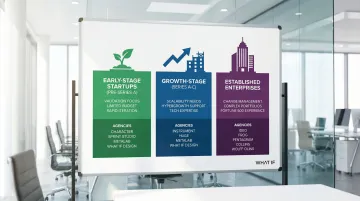
Early-stage startups (pre-Series A): Lean, agile agencies with rapid iteration capabilities work best here. Prioritize validation over polish — test concepts before committing to a full visual system, and look for partners familiar with startup constraints: limited budgets, investor-ready materials on short timelines, and the ability to pivot if the positioning doesn't land. Consider: Character, Sprint Studio, MetaLab, What if Design.
Growth-stage companies (Series A-C): Speed still matters here, but so does scalability — brand systems must hold up as the team grows and the product expands across multiple channels. Tech company experience helps agencies understand hypergrowth dynamics and what it means to be evaluated by enterprise buyers who scrutinize every brand signal. Consider: Instrument, Huge, MetaLab, What if Design.
Established enterprises: At this scale, change management expertise and stakeholder alignment skills matter as much as design capability. Brand architecture must handle complex product portfolios and segmented audiences across business units and regions. Look for agencies with proven Fortune 500 track records — the dynamics of a large enterprise rebrand are categorically different from a startup launch. Consider: IDEO, Frog Design, Pentagram, Collins, Wolff Olins.
Assess cultural fit and working style
Effective sprints require strong collaboration, which means cultural alignment matters as much as capability.
Beyond expertise and pricing, evaluate how agencies work:
Communication style: Understand early whether an agency works primarily synchronously — real-time workshops, daily standups — or asynchronously via shared documents and recorded updates. Neither is inherently better, but a mismatch in communication cadence creates friction throughout the engagement, particularly during a compressed sprint timeline.
Decision-making approach: Some agencies run consensus-driven processes; others need a clear decider in the room. Sprint methodology inherently requires committing to decisions under time pressure — an agency uncomfortable with that dynamic will struggle to deliver the compressed timelines the format promises, and a stalled sprint is rarely recoverable before the investor meeting or enterprise deal timeline that made the schedule urgent.
Values and domain alignment: For your climate tech or deep-tech company, this is particularly important. An agency that has never worked with a carbon capture company, a grid analytics platform, or a clean energy hardware startup will spend the first two weeks getting up to speed on context that experienced partners already understand. That time costs you. What if Design focuses specifically on climate and deep-tech startups at Seed through Series B, which means less onboarding and faster ramp-up on the technical and market context that shapes positioning decisions.
Practical next steps
To select the right agency partner:
- Schedule discovery calls with 3-5 agencies to assess fit and communication style
- Request case studies from similar company stages and industries, not just the most visually impressive work in their portfolio
- Ask for detailed sprint process documentation: agendas, deliverables, and how decisions are made during the workshop
- Request proposals with clear milestones, deliverables, and payment terms
- Conduct reference checks with past clients to validate actual timelines and working experience
Conclusion
Design sprints compress months of branding work into focused weeks, using structured validation and testing to reduce risk and surface investor-ready positioning faster. That speed matters for you because the brand credibility gap is often what's holding back your next funding conversation, partnership announcement, or enterprise deal.
Selecting the right design sprint agency means balancing multiple factors: sprint expertise, industry specialization, cultural fit, budget alignment, and a proven ability to deliver measurable branding outcomes within compressed timelines.
The agencies here represent the full spectrum, from boutique sprint specialists to global transformation firms, each offering distinct advantages for different company stages and needs.
To find your fit: start by assessing your timeline — a 1-week sprint versus a 2-4 week engagement changes which agencies are realistic options and what they can deliver. Define your budget range and the specific deliverables you need before those calls happen. Review case studies from your industry vertical, not just the most visually impressive work in their general portfolio. Then schedule discovery calls with 2-3 shortlisted agencies before committing.
What if Design works with climate tech and deep-tech startups at Seed through Series B to build investor-ready brand systems, often delivering a full brand identity in under four weeks. If your brand hasn't caught up to where your company actually is, that's a good place to start. Book a call.
Frequently asked questions
What is a design sprint and how does it differ from traditional branding?
Design sprints are time-boxed workshops (3-5 days) that compress months of branding work into rapid prototyping and testing cycles. Traditional branding uses sequential research, revision, and approval phases that commonly extend timelines to 3-6 months or longer. The sprint model forces faster decisions and validates concepts with real users before full investment.
How long does a typical design sprint for branding take?
Sprint workshops run 3-5 days, with pre-sprint preparation (1-2 weeks) and post-sprint implementation (2-4 weeks) bringing total timelines to 4-8 weeks for complete brand development. For climate tech founders approaching a hard deadline like a fundraising close or conference appearance, some agencies can prioritize specific deliverables in under two weeks.
What is the average cost of hiring a design sprint agency?
Boutique agencies charge $15,000-$75,000 for focused sprints. Mid-tier agencies range from $75,000-$250,000. Premium firms command $250,000-$1,000,000+ for enterprise-level transformations. For early-stage climate tech startups, the relevant range is typically $25,000-$150,000 depending on scope.
Can design sprints work for established brands or just startups?
Sprints work for both. If you're early-stage, use them to establish brand identity and validate positioning quickly before over-investing in a full visual system. If you're more established, sprints work well for rebranding, sub-brand development, and testing brand evolution with real audiences before committing to full implementation.
What deliverables should I expect from a design sprint agency?
Typical deliverables include validated brand strategy and positioning, visual identity concepts (logo, color palette, typography), a brand guidelines document, messaging framework, tested prototypes or mockups, user feedback synthesis, and an implementation roadmap with prioritized next steps.
How do I prepare my team for a design sprint workshop?
Assemble a cross-functional team of 5-7 people including at least one decision-maker, block calendars for the full sprint duration without exceptions, gather existing brand materials and any competitive research you have, define clear sprint goals and success criteria in advance, and brief all participants on the sprint process so they understand the time commitment and why rapid decisions are a feature rather than a flaw.