You've built a product that works. You have pilots running, maybe funding secured, and a technology that solves a real problem in the climate or deep-tech space. But the agency you hire to design your product experience can either accelerate your market traction or quietly hold it back.
The gap between a UX agency that understands technical products and one that doesn't is rarely visible in their portfolio decks. It shows up three months into a project, when you're explaining what a carbon intensity metric means for the fourth time, or when the proposed user flow doesn't account for the procurement approval chain your enterprise buyer actually goes through.
This list focuses on agencies with demonstrated capability across technical industries, complex products, and multi-stakeholder environments. It's organized to help you identify which type of partner fits your current stage, your sector, and your specific challenge.
TLDR
- Leading agencies prioritize measurable business outcomes over visual polish
- Strategic partners combine user research, technical expertise, and cross-disciplinary collaboration
- Portfolio quality, process transparency, and industry specialization signal strong partnerships
- US pricing ranges from $50-150/hour for boutique firms to $200-300+/hour for premium consultancies
Overview of UX design agencies in 2026
What defines leading UX agencies today
If you're building a technical product in climate, energy, or deep-tech, the agency you work with needs to do more than run standard usability tests. They need to understand multi-stakeholder sales environments, regulatory constraints, complex user workflows, and how to translate genuinely technical value into clear product experiences. The agencies that stand out in 2026 combine rigorous user research with the domain awareness to ask better questions from day one.
Accessibility and inclusive design have also shifted from compliance checkboxes to genuine competitive advantages. Globally, 1.3 billion people live with some form of disability, and agencies that design for diverse abilities unlock larger addressable markets while demonstrating genuine ethical leadership.
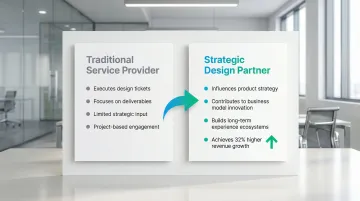
From service providers to strategic partners
The agency-client relationship has evolved significantly. Today's leading firms contribute to product strategy and long-term product architecture rather than simply executing design requests. According to McKinsey's Business Value of Design research, design-driven companies achieve 32% higher revenue growth and 56% higher shareholder returns compared to competitors, which means design investment shows up directly in revenue and market position.
The rise of specialization
This shift toward strategic partnership has naturally driven agencies toward focused domain expertise. Agencies now specialize in B2B versus consumer products, specific sectors like healthcare, energy, or fintech, and emerging interaction paradigms like voice and spatial computing.
For founders in technical sectors, that domain familiarity isn't a nice-to-have. An agency that already understands the difference between a utility-scale buyer and an industrial decarbonization customer will ask better research questions and propose flows that actually match how procurement decisions get made.
Top UX design agencies to work with in 2026
We selected these agencies based on proven portfolios with measurable results, rigorous human-centered research practices, strategic product thinking, technical implementation excellence, and innovation leadership.
McKinsey Design
McKinsey Design integrates UX strategy with management consulting, connecting design decisions directly to business outcomes. Founded as part of McKinsey & Company's evolution into digital transformation, the firm combines decades of strategic consulting expertise with human-centered design practice.
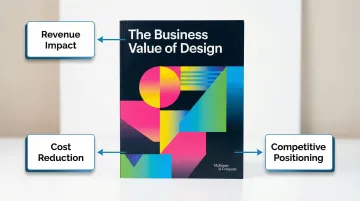
Their primary differentiator is the "Business Value of Design" methodology, which quantifies design's impact on revenue, cost reduction, and competitive positioning. This approach has been recognized with a Red Dot Award and makes them well-suited for organizations seeking transformation at the executive level.
| Category | Details |
|---|---|
| Services offered | Design strategy, user research, product design, service design, organizational design transformation |
| Industries & specialization | Healthcare systems, financial services, sustainability and clean energy, automotive, B2B enterprise |
| Notable characteristics | Large global team, premium pricing ($250-400/hour), work includes Hyundai EV charger UX, strategic integration with C-suite consulting |
Accenture Song
Accenture Song operates at the intersection of creativity, technology, and data, running complex transformations across Fortune 500 organizations simultaneously. With over 5,000 creative and experience professionals globally, they deliver what they call the "Flywheel" approach, which integrates experience vision, build and optimization, and creative transformation into continuous improvement cycles.
Named a 2025 Gartner Leader in digital experience services, Accenture Song differentiates through their ability to execute complex transformations across multiple markets at the same time, backed by Accenture's technical implementation capabilities. Their Dublin headquarters anchors a worldwide network of delivery centers.
| Category | Details |
|---|---|
| Services offered | Experience vision and strategy, digital product build and optimization, creative transformation, marketing technology integration |
| Industries & specialization | Automotive (Land Rover), retail and e-commerce, financial services, B2B technology (HP, Salesforce) |
| Notable characteristics | 5,000+ team members, global delivery centers, premium pricing tier, 2025 Gartner Magic Quadrant Leader |
Deloitte Digital
Best for: organizations in heavily regulated industries building next-generation intelligent products.
Deloitte Digital combines deep industry knowledge with advanced engineering capabilities and emerging AI integration. With 2,200+ professionals and a strong presence in healthcare, public sector, and B2B markets, they excel at designing experiences where regulatory compliance is a core constraint rather than an afterthought.
Their standout capability is "agentic AI" integration, building experiences where AI agents act on behalf of users to complete complex tasks. Their New York headquarters supports a global practice that bridges consulting, design, and technology implementation, which earned them both a 2025 Gartner Leader designation and a 2025 Clio Sports Award for their WNBA app redesign.
| Category | Details |
|---|---|
| Services offered | Digital experience services, front-office optimization, agentic AI integration, design systems, usability testing |
| Industries & specialization | Healthcare and life sciences, public sector and government, financial services, B2B enterprise software |
| Notable characteristics | 2,200+ team members, 2025 Gartner Leader, 2025 Clio Sports Award for WNBA app redesign, premium pricing ($200-350/hour) |
frog
frog has spent 50+ years leading human-centered design, now as part of Capgemini Invent. Based in San Francisco with global studios, frog's philosophy centers on designing experiences that actively improve the systems they touch, rather than simply minimizing harm. They work across healthcare, finance, and transportation, bringing a clear-eyed perspective on industries that have been slow to evolve.
This commitment to what they call regenerative design makes them particularly relevant for organizations with genuine ESG commitments, where the product experience itself needs to reflect the company's broader values without slipping into surface-level aesthetics.
| Category | Details |
|---|---|
| Services offered | Design research, customer experience strategy, service design, DesignOps, digital product design |
| Industries & specialization | Healthcare innovation, financial services transformation, transportation and mobility, consumer technology |
| Notable characteristics | 500+ team members, 50+ years of HCD leadership, part of Capgemini Invent, mid-premium pricing ($175-275/hour) |
IDEO
IDEO created "Design Thinking" and remains its most recognized practitioner. With 40+ years of experience and headquarters in Palo Alto, IDEO works primarily with education, healthcare, and social sector organizations seeking transformational change. Their methodology (empathize, define, ideate, prototype, test) has become the industry standard and is now practiced in-house at companies worldwide.
What distinguishes IDEO is their focus on organizational design alongside product design, helping companies build internal innovation capabilities that outlast the engagement. Their work on Teal Health was featured in Time's Best Inventions 2025, reflecting their continued focus on health equity and social innovation.
| Category | Details |
|---|---|
| Services offered | Design strategy, digital transformation, organizational design, innovation capability building, prototyping |
| Industries & specialization | Education and learning, healthcare and wellness, social impact and nonprofit, government services |
| Notable characteristics | 500+ team members, 40+ years leading Design Thinking, Time Best Inventions 2025 recognition, premium pricing ($200-350/hour) |
Designit
Designit operates with a "Do No Harm" principle, placing equal weight on human impact and technological capability. Headquartered in Copenhagen with global reach, they specialize in innovation, brand experience, and service design for transportation, finance, and energy sectors. Their European roots inform a distinct perspective on ethical design and long-term sustainability.
Their core strength is in complex service ecosystems: designing experiences that span multiple touchpoints, stakeholders, and timeframes. Notable projects include the JFK Terminal 4 redesign and work with EPI and Acer.
| Category | Details |
|---|---|
| Services offered | Innovation strategy, brand experience design, service design, digital product development, design research |
| Industries & specialization | Transportation and mobility, financial services, energy and utilities, consumer technology |
| Notable characteristics | Mid-large team, European headquarters (Copenhagen), mid-premium pricing ($150-250/hour), work with JFK Terminal 4 |
ustwo
ustwo is an employee-owned B Corp based in London, known for precision in execution and a commitment to ethical design practice. With 200-500 team members, they focus on healthcare, mobility, and consumer products, bringing a values-driven approach to commercial work. Their B Corp certification reflects a commitment to social and environmental responsibility as a business operating principle, not a marketing position.
As an employee-owned studio, they prioritize long-term thinking and values alignment over short-term profits. Notable work includes projects with Google, The Body Coach, and their proprietary "Cancer Platform" for healthcare innovation.
| Category | Details |
|---|---|
| Services offered | Digital product design, interaction design, service design, user research, prototyping and testing |
| Industries & specialization | Healthcare innovation, mobility and transportation, consumer apps and platforms, wellness and fitness |
| Notable characteristics | 200-500 team members, B Corp certified, employee-owned, mid-premium pricing ($150-225/hour), London headquarters |
What if Design
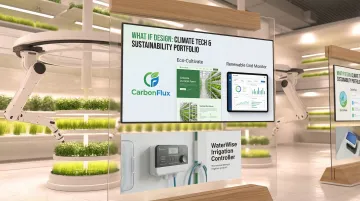
What if Design is a full-service creative partner founded in 2020, specializing in climate tech and purpose-driven organizations. With a mission to make high-quality design accessible for climate work competing against business-as-usual, they operate remote-first from San Francisco and Bangalore. In five years, they've built a portfolio spanning climate tech companies, unicorns like TATA1mg and Pristyn Care, and government organizations including the Ministry of Health Saudi Arabia.
Three things set them apart from general-purpose agencies: cost efficiency (roughly 3x cheaper than building an in-house senior design function), rapid turnaround capability (as fast as 48 hours for specific deliverables), and deep specialization in climate, clean tech, and sustainability sectors. As a Design Declares certified agency, they bring mission alignment and design discipline to organizations working toward environmental impact at scale.
| Category | Details |
|---|---|
| Services offered | Brand strategy, web design and Webflow development, product design and UX research, design systems, marketing design, all with climate-focused expertise |
| Industries & specialization | Climate tech, clean tech, green tech, sustainable tech, frontier tech, electric vehicles, carbon capture, ESG data companies |
| Notable characteristics | Remote-first (San Francisco & Bangalore), 5 years in business, mission-driven approach, Design Declares certified, cost-efficient alternative to in-house teams, 48-hour turnaround capability |
MetaLab
MetaLab takes an "interface-first" approach to creating products that shape how users expect software to feel. Based in Victoria, BC, with a team of 50-200, they've designed interfaces for some of tech's most recognizable brands including Slack, Coinbase, and the TED Connect app. Their focus on SaaS, fintech, and consumer tech positions them well for startups and scale-ups seeking to differentiate through exceptional interface design.
MetaLab has built its reputation as the go-to agency for venture-backed startups that need to make a strong first impression with investors and early adopters, having earned that position through a consistent portfolio of high-growth brands. Their interface-first philosophy starts with interaction patterns and visual quality, then works backward to strategy.
| Category | Details |
|---|---|
| Services offered | Interface design, product strategy, branding and visual identity, prototyping, design systems |
| Industries & specialization | SaaS and B2B software, fintech and financial products, consumer technology platforms, venture-backed startups |
| Notable characteristics | 50-200 team members, Victoria BC headquarters, portfolio includes Slack and Coinbase, mid-premium pricing ($175-250/hour) |
How we chose the best UX design agencies
Evaluation methodology
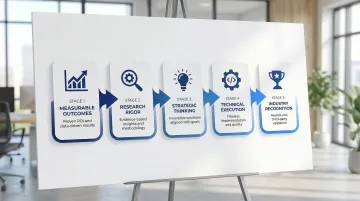
Our selection process prioritized five core criteria:
- Demonstrated outcomes: conversion rate improvements, retention gains, or efficiency metrics from named projects, not just portfolio aesthetics
- Research depth: structured usability testing, user interviews, and hypothesis validation embedded throughout the process, not added at the end
- Strategic contribution: evidence that the agency influenced product decisions, not just executed design briefs
- Technical literacy: designers who can read a user flow from an engineering perspective and communicate clearly with dev teams
- External validation: Gartner recognition, industry awards, or client references that confirm sustained delivery quality
Common selection mistakes
These are the most common mistakes when choosing a UX agency:
- Prioritizing aesthetics over outcomes: a beautiful portfolio doesn't confirm the agency can move metrics
- Choosing by brand name alone without verifying who actually works on your project day-to-day
- Skipping evaluation of process transparency and research rigor
- Not assessing how the agency collaborates with your product, engineering, and marketing teams
Aligning agency selection with project needs
Your project stage and sector should drive agency selection more than brand recognition. A few specific scenarios worth thinking through:
- If you're a pre-Series A climate tech company preparing for a raise or partnership announcement, you need an agency that can move quickly and already understands how your technology fits into broader energy or industrial systems.
- For B2B technical products with long procurement cycles, the agency's ability to map complex stakeholder workflows matters more than their visual portfolio.
- If your product sits at the intersection of hardware and software, look for prior work that shows they can handle that complexity without oversimplifying the user experience.
Conclusion
Choosing the right UX agency starts with being clear about what you actually need from them. If you're working on a technically complex product with a multi-stakeholder sales cycle, a general-purpose agency with a beautiful portfolio may not be the right fit, regardless of their size or reputation.
The agencies featured here represent the industry's leaders across different specializations, pricing tiers, and geographic markets.
When evaluating potential partners, these criteria consistently separate the right fit from a costly mismatch:
- Industry expertise that accelerates understanding of your users and regulatory environment
- Platform specialization that matches your technical stack
- Team culture fit that enables smooth collaboration
- Pricing alignment with your budget and project scope
- Proven track record delivering results that matter to both users and business stakeholders
If your digital presence hasn't caught up to your technical progress or recent funding, that gap tends to show up at the worst possible moments: a conference pitch, a partnership conversation, or an investor meeting. For climate and deep-tech founders navigating that gap, What if Design specializes in exactly this transition. Connect with us to see if we're the right fit.
Frequently asked questions
What should I look for when choosing a UX design agency?
Look for proven portfolio quality with measurable results, transparent research-driven processes involving real users, and strategic thinking beyond visual design. Prioritize agencies whose expertise aligns with your industry, platform, and business maturity stage.
How much does it cost to hire a UX design agency?
Boutique agencies charge $50-150/hour, mid-tier firms $150-200/hour, and premium consultancies $200-300+/hour. Project-based pricing ranges from $30,000 to $200,000+ depending on scope and complexity, while retainer models typically cost $10,000-50,000/month.
What's the difference between a UX agency and a UI agency?
UX agencies focus on research, user behavior, information architecture, and problem-solving functionality, while UI agencies emphasize visual design and aesthetic polish. The best agencies integrate both disciplines seamlessly.
How long does a typical UX design project take?
Discovery takes 2-4 weeks, wireframing 3-6 weeks, visual design 4-8 weeks, and testing 2-4 weeks. Comprehensive projects typically span 3-6 months, though specialized agencies can deliver rapid iterations in as little as 48 hours for specific deliverables.
Do I need a large agency or can a boutique firm deliver quality results?
Both can deliver excellence. Large agencies offer broad resources and enterprise-scale capabilities, while boutique firms provide specialized expertise, personalized attention, cost efficiency (often 3x cheaper), and faster decision-making that sometimes outperforms a large firm's junior team.
What industries do top UX design agencies specialize in?
Common specializations include fintech, healthcare, B2B SaaS, e-commerce, climate tech and sustainability, consumer electronics, automotive, education technology, and government services. Relevant industry experience accelerates understanding of user needs, regulatory requirements, and competitive landscapes.