For climate and deep-tech SaaS founders, this credibility gap is particularly damaging. Your buyers — utility procurement teams, enterprise operations leads, asset managers — evaluate vendors carefully and slowly. A confusing onboarding flow or a dashboard that requires 45 minutes of training doesn't just create support tickets; it creates doubt about the product's maturity.
This article covers 10 agencies that specialize in SaaS UX design, with a breakdown of who each one is best suited for, so you can find the right fit for your stage, budget, and vertical.
With customer acquisition costs rising and competition intensifying, product-led retention has become the most efficient lever for growth. Research confirms that strategic investment in UX design can yield up to a 9,900% ROI, primarily by reducing churn and accelerating user activation. For climate and deep-tech SaaS founders, the challenge is finding a partner who understands both the design fundamentals and the sector-specific complexity: multi-stakeholder user bases, regulated workflows, and buyers who are slow to trust new vendors.
TLDR
- Leading agencies use rapid prototyping, design sprints, and validation to de-risk innovation
- Evaluate partners on innovation track record, measurable outcomes, delivery speed, and vertical fit
- Pricing: $25-$150+/hr by region, or $3,000-$15,000/mo subscription models
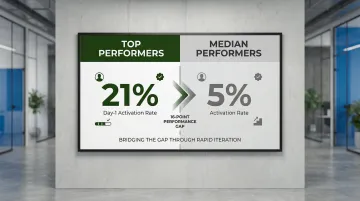
- Top SaaS products hit 21% Day-1 activation vs. 5% median; for climate tech SaaS, closing this gap directly affects pilot renewals and enterprise contract expansion
Overview of SaaS UX design for product innovation
As a climate or deep-tech SaaS founder, you're facing a version of a problem common across all software: features get built that users never adopt. You're building for buyers who are skeptical by default, operate in regulated environments, and often have complex multi-user workflows. Building features without validating them first isn't just expensive in wasted engineering time; it risks losing the early adopters you've worked hard to acquire.
Picture a grid analytics startup that spent four engineering sprints building a multi-step reporting flow, only to discover in a pilot review that their utility buyer's compliance team needed outputs in a completely different format — a gap that a single prototype session with users would have caught before a line of code was written.
Product innovation UX solves this by validating assumptions before development starts, using experimentation, rapid prototyping, and design sprints to test ideas with real users.
The difference from traditional UX is meaningful: instead of optimizing existing features, innovation design focuses on validating whether new features solve actual problems worth engineering time.
Continuous innovation matters because user expectations evolve faster than development cycles, competition forces constant feature differentiation, and better UX directly affects retention and revenue.
Improving findability and information architecture can boost product usage metrics by 85%, which directly affects lead generation. Better information architecture determines whether users find what they need and return. That's a unit economics problem, not a visual design one.
When you prototype first, validate with users, and iterate based on data, you reduce development rework by 25%, saving substantial engineering time that would otherwise be spent rebuilding features that miss the mark.
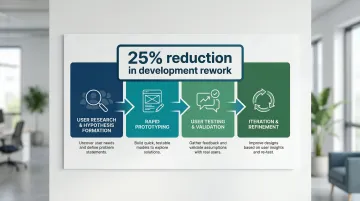
Pre-launch testing identifies friction points before a single line of code is written.
The companies below were selected based on their innovation methodology, delivery speed, SaaS-specific expertise, and case studies that show measurable business results, not just polished visuals.
Top SaaS UX design companies for product innovation
We evaluated dozens of agencies to identify the best SaaS UX design partners for product innovation. Selection criteria included:
- Innovation capabilities and technical specialization
- SaaS-specific expertise and portfolio depth
- Client outcomes and measurable results
- Pricing transparency and engagement models
- Range of services (strategy through execution)
Company 1: Cieden
Background: Founded by a design professor in 2016, Cieden specializes in complex B2B SaaS, AI prototyping, and logic-heavy applications that other agencies avoid. Their academic methodology brings research rigor to product design.
Why it stands out: Handles 50-step workflows with ease, offers rapid AI prototyping capabilities, and provides real-time project tracking transparency. Their approach combines theoretical foundations with practical SaaS expertise, making them well-suited for complex enterprise tools. If your buyer needs to evaluate whether your product can handle their operational complexity before signing, Cieden's ability to design and prototype multi-step workflows means that's not the bottleneck.
| Feature | Details |
|---|---|
| Pricing | $50-99/hr |
| Location | USA/Canada/Ukraine |
| Core services | Product design, AI/ML interfaces, rapid prototyping, complex workflow design |
| Notable clients | Blizzard, Apollo, Sitenna |
Company 2: Phenomenon
Background: Full-cycle partner offering strategy through development, specializing in compliance-heavy SaaS requiring HIPAA, GDPR, and FERPA adherence. They bridge US strategy with European execution efficiency.
Why it stands out: Compliance-first approach prevents costly legal issues, offers a 1-week design trial before commitment, and understands the regulatory landscape that many agencies overlook. A strong fit for fintech, healthtech, and edtech. For regulated buyers, compliance-ready design removes a common procurement objection before it surfaces in the evaluation process.
| Feature | Details |
|---|---|
| Pricing | $50-99/hr |
| Location | USA/Poland/Ukraine/Switzerland |
| Core services | SaaS UI/UX, full-stack development, compliance design |
| Notable clients | Isora, MasterClass |
Company 3: What if Design
Background: Climate and deep-tech focused design studio founded in 2020, operating remote-first with bases in San Francisco and Bangalore. They work exclusively with climate, deep-tech, and purpose-driven SaaS companies, which means the team already understands regulatory context, multi-stakeholder messaging, and the credibility signals that matter to enterprise and institutional buyers.
Why it stands out: What if Design reaches full brand and product delivery in 2-4 weeks in most cases, significantly faster than traditional agencies that spend weeks on research alone. Their subscription model scales without requiring a long-term agency retainer, and the team doesn't need to be briefed on what carbon capture, grid modernization, or hydrogen infrastructure actually means. That domain familiarity cuts onboarding time and reduces the back-and-forth that slows most agency engagements.
For founders preparing for a funding round, partnership announcement, or conference, the studio's 48-hour turnaround on specific deliverables means a hard deadline doesn't have to compromise quality.
| Feature | Details |
|---|---|
| Pricing | Subscription from $2,999-$6,999/mo |
| Location | San Francisco/Bangalore, remote-first |
| Core services | Brand strategy and positioning, investor-ready websites, product UX for climate and deep-tech SaaS, rapid prototyping |
| Notable clients | TATA1mg, Ministry of Health Saudi Arabia, HYDGEN, Ribbit Network |
Company 4: ProCreator
Background: 60+ SaaS designers specializing in data visualization and analytics dashboards. They transform complex data into readable, navigable interfaces.
Why it stands out: Direct designer collaboration without account manager overhead, strong track record in manufacturing and sales intelligence dashboards, and experience making data accessible to non-technical users. When your buyer's first question in a demo is whether their team can actually use the dashboard, that track record in making complex data accessible directly affects whether a pilot converts to a contract.
| Feature | Details |
|---|---|
| Pricing | $25-49/hr |
| Location | India/UK/Indonesia |
| Core services | Data visualization, design systems, web/mobile development |
| Notable clients | Scoop, MangOS, Multplyr |
Company 5: Eleken
Background: Subscription-based model that embeds designers directly into client Slack channels. Founded in 2015, they focus exclusively on SaaS applications.
Why it stands out: 3-day free trial reduces engagement risk, no-middleman approach accelerates communication, fast embedded team integration, and flat-rate subscription model provides budget predictability. When you're managing runway while preparing for a Series A, knowing exactly what design costs each month lets you scope work around commercial milestones.
| Feature | Details |
|---|---|
| Pricing | Subscription from $3,799/mo |
| Location | Ukraine/Poland/Estonia |
| Core services | SaaS application design, MVP design, UX audits |
| Notable clients | Hubble Network, TextMagic, Gamaya |
Company 6: Arounda
Background: Fintech and high-stakes SaaS specialist that has helped clients raise over $1B in funding. They understand the investor perspective on design.
Why it stands out: 3-day free trial, business-focused design that improves key metrics, proactive partner approach, and 30+ awards. They design with fundraising and growth metrics in mind. Their track record of helping clients raise over $1B in funding means they already understand what investors and enterprise buyers need to see before they commit.
| Feature | Details |
|---|---|
| Pricing | $25-49/hr |
| Location | Ukraine/Poland/Germany/USA |
| Core services | SaaS UX, MVP development, pitch decks, branding |
| Notable clients | WordPress, Player's Health, MOJO-CX |
Company 7: StanVision
Background: Bulgarian agency with 24 Awwwards, focusing on high-converting SaaS and onboarding optimization. They approach design through a growth lens.
Why it stands out: Metrics-first mindset, onboarding flow expertise, and Webflow specialization for fast marketing asset delivery. They measure success by conversion rates, not aesthetics. For founders where a high-converting onboarding flow determines whether a pilot user activates or churns before the trial ends, that orientation matters.
| Feature | Details |
|---|---|
| Pricing | $50-99/hr |
| Location | Bulgaria |
| Core services | SaaS UX, Webflow development, onboarding flows |
| Notable clients | Primer, Rillet, Pax.world |
Company 8: MetaLab
Background: 200+ person Canadian studio that has worked on 18 unicorns including Slack, with products that now serve 2.2 billion users. They're behind some of the most recognized SaaS products in market.
Why it stands out: Consumer-grade UX for enterprise tools, zero-to-one design specialization, and a track record in AI-first product design including Suno and Midjourney. Premium pricing reflects their positioning and client roster. For founders positioning against more established competitors, consumer-grade UX signals product maturity to enterprise evaluators who use polished software every day.
| Feature | Details |
|---|---|
| Pricing | $100k+ minimum |
| Location | Canada |
| Core services | Zero-to-one design, full-stack engineering, AI product development |
| Notable clients | Slack, Coinbase, Midjourney, Upwork |
Company 9: Goji Labs
Background: Los Angeles-based agency that functions as a technical co-founder for non-technical founders. They prioritize strategy before moving to design.
Why it stands out: Strategy-first approach, risk-mitigation focus, full product strategy sprints before design, and legal/market risk guidance. Well-suited for founders who need strategic thinking, not just execution. If you're approaching your first enterprise deal and need to validate the product direction before committing to a full build, a strategy-first engagement reduces the risk of building the wrong thing for the wrong buyer.
| Feature | Details |
|---|---|
| Pricing | $100-149/hr |
| Location | USA |
| Core services | Product strategy, SaaS development, UX research |
| Notable clients | WWF, PredictionStrike, Root Insurance |
Company 10: Superside
Background: Creative-as-a-Service subscription model with global talent and 24/7 support. They handle high-volume creative output for growth teams.
Why it stands out: Fast delivery (12-24 hours), capacity to scale creative volume for growth teams, and experience handling marketing design at large scale. A fit for you if you're running multiple campaigns across channels while managing an active sales pipeline — this model keeps your commercial team moving without waiting on internal creative resources.
| Feature | Details |
|---|---|
| Pricing | Subscription $10k+/mo |
| Location | South Africa/Argentina/Brazil |
| Core services | Ad creative, motion design, marketing web design |
| Notable clients | Shopify, Salesforce, Amazon, Notion |
How we chose the best SaaS UX design companies
We evaluated agencies across three dimensions that directly affect your product's success: innovation methodologies, SaaS-specific outcomes, and delivery models.
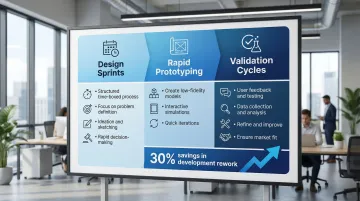
Innovation methodologies determine how agencies handle uncertainty and reduce project risk. We prioritized agencies that use design sprints for rapid problem-solving, rapid prototyping to validate concepts early, and validation cycles that accelerate learning.
Agencies that prototype before building can save companies 30% in development rework.
SaaS-specific case studies showing measurable business outcomes separated serious contenders from generalists. We looked for evidence of improved activation rates, retention metrics, and conversion improvements, not just polished visual portfolios.
Agencies demonstrating 85% improvements in key metrics like findability received higher rankings.
Specialization creates value through depth of knowledge. Vertical expertise (climate-tech, fintech, healthcare) accelerates time-to-market because the team already understands user needs, regulatory requirements, and industry workflows before the first kickoff call.
Horizontal capabilities (onboarding optimization, dashboard design, data visualization) signal technical mastery of complex UX challenges.
Pricing structure and engagement flexibility also shaped our evaluation. For early-stage climate and deep-tech companies running lean, subscription-based models and clear project scoping reduce the risk of open-ended agency relationships. We found that pricing transparency correlated with faster onboarding and clearer scope management — which matters when you're trying to demonstrate design progress during an active investor diligence or enterprise procurement process.
What makes a great SaaS UX design partner for innovation
Research-driven approach
The right partner validates assumptions with user research, prototypes before building, and measures post-launch impact. For climate and deep-tech SaaS, this matters more than in most categories. Your early adopters are often technical buyers who will stop using a product that adds friction rather than submitting a feature request.
A water infrastructure SaaS that skipped user research during a feature build found that their enterprise pilot customer's operations team had already built a manual workaround and stopped using the new feature entirely — without filing a single support ticket. The signal that something was wrong came only when the pilot didn't renew.
Look for a partner that tests hypotheses with real users rather than internal assumptions, runs prototype validation before full development begins, measures post-launch impact to inform future iterations, and aligns design decisions with documented user behavior.
Speed and agility
When evaluating partners, look for the ability to run design sprints, deliver rapid prototypes, and integrate into your agile development cycles without slowing your team down.
According to Amplitude's Product Benchmark Report, top-performing SaaS products achieve 21% Day-1 activation rates versus just 5% for median performers. For a clean energy analytics company preparing a pilot renewal with a utility, the difference between those two numbers was a streamlined onboarding flow built and tested in two sprint cycles — enough for the buyer's team to demonstrate value internally before the renewal conversation. Bridging this gap requires rapid iteration and continuous testing, not a six-month redesign cycle.
Business alignment
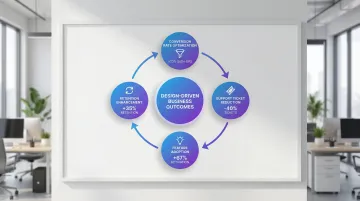
The partner you choose should understand SaaS metrics — activation, retention, churn, customer lifetime value — and make design decisions that connect to your business goals. Look for agencies that can clearly articulate how design changes drive results: increasing conversion rates through optimized user flows, reducing support tickets via more intuitive interface design, improving feature adoption with better-structured onboarding, and improving retention through continuous experience refinement.
For a hydrogen infrastructure SaaS, reducing onboarding time from 90 minutes to under 20 through structured UX redesign translated directly into faster pilot sign-off — because the procurement team no longer needed to schedule multiple training sessions before evaluating the product.
Conclusion
The right UX design partner reduces the time between shipping a feature and seeing users actually adopt it. If you're building in climate or deep-tech, that speed matters more than it does in most sectors because your buyers take longer to trust, longer to commit, and longer to renew.
According to Amplitude's Product Benchmark Report, 69% of products that rank in the top quartile for Week 1 activation also rank in the top quartile for 3-month retention. Onboarding is not a UX nicety; it's how you keep the customers you've worked months to acquire.
Evaluate agencies based on specialization match, methodology, and speed, not just portfolio visuals. The agencies above cover a wide range of pricing tiers, geographies, and specializations, from compliance-heavy healthcare SaaS to AI-first enterprise tools.
If your product serves the climate or deep-tech sector, What if Design works specifically within this space, with full-service delivery typically completed in under four weeks and a team that doesn't need to be briefed on what carbon capture, grid modernization, or hydrogen infrastructure actually means.
View our work to see how we've helped climate and deep-tech companies translate complex products into experiences their users and investors understand.
Frequently asked questions
What's the difference between SaaS UX design and product innovation design?
Product innovation design focuses on experimentation, rapid prototyping, and validation to discover user needs in high-uncertainty environments. Standard SaaS UX optimizes existing features for usability and efficiency rather than exploring whether new features are worth building at all.
How much should I budget for SaaS UX design services?
Hourly rates range from $25-49 (offshore) to $100-149 (premium US agencies), with subscription models at $3,000-$15,000/month. Expect $8,000-$30,000 for MVP design and $50,000-$200,000+ for full redesigns.
Should I hire an agency or build an in-house design team?
Agencies provide speed, diverse expertise, and lower overhead, while in-house teams offer deep product knowledge and continuity. A hybrid approach can work well for you: use agencies for specialized or time-sensitive work while building core in-house capabilities over time.
How long does a typical SaaS UX design project take?
Timelines vary by scope: rapid prototypes take 1-2 weeks, MVP design 4-8 weeks, and full redesigns 3-6 months. Some agencies offer 48-hour turnarounds for specific deliverables.
What should I look for in a SaaS UX design agency's portfolio?
Look for measurable business outcomes (conversion rates, retention improvements, activation metrics), evidence of handling complex flows (dashboards, multi-step workflows, data visualization), innovation methodology artifacts (prototypes, design sprints, research documentation), and vertical specialization that matches your market. Portfolios that only show visual design, without context on outcomes, are a signal of surface-level work.
Do I need a specialized agency for climate-tech or purpose-driven SaaS?
Specialized agencies understand climate-tech user needs, regulatory context, and the credibility signals that matter to enterprise and institutional buyers. They translate technically complex products into messaging that procurement teams and investors can evaluate quickly, without requiring a demo first. Generalist agencies typically lack this starting context and spend the first weeks of an engagement learning what a specialized partner already knows.