Low-fidelity wireframes
Surface alignment gaps early. Wireframes give your team a shared reference for how the product works before any code is written, catching costly misalignments at the cheapest possible stage in the process.
When your product is technically complex (a grid analytics dashboard, a carbon accounting platform, an energy management system), the gap between what it does and what buyers understand is rarely a product problem. It is a communication and experience problem. When that gap closes, pilots move faster, developers build with clarity, and the next funding conversation starts from a much stronger position. What if Design works with climate and deep-tech teams to prototype product flows that are legible to technical and non-technical buyers alike, from early wireframes that surface alignment gaps to high-fidelity interactive prototypes that do real work in investor meetings and user testing sessions.
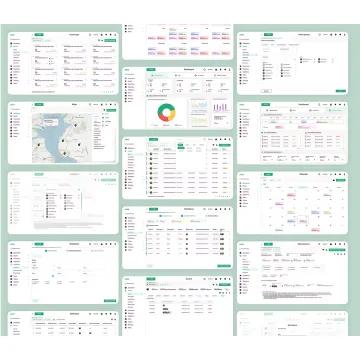
From first wireframes to investor-ready interactive prototypes, every engagement is scoped to the complexity of your product and the decision your prototype needs to support.
Surface alignment gaps early. Wireframes give your team a shared reference for how the product works before any code is written, catching costly misalignments at the cheapest possible stage in the process.
Interactive prototypes that do real work in investor meetings and user testing sessions. Stakeholders can click through actual flows, which replaces lengthy explanation and surfaces usability issues before development begins.
Map the full path your user takes from first login to the action that matters. For complex products with multiple user types or integration steps, journey maps clarify where flows break down and where the product needs to do more work before buyers trust it.
Structured testing sessions with your actual target users, covering task completion, friction-point identification, and a prioritized list of changes before development starts. Reduces the volume of post-launch corrections significantly.
For products scaling across multiple views, user types, or integrations, a component-based design system keeps UI consistent without slowing down development. Delivered in Figma with developer-ready documentation.
Define how each interface element behaves at every state: hover, loading, error, confirmation. Micro-interactions carry more of the UX weight than most teams account for, and developer-ready specs mean they get built correctly the first time.
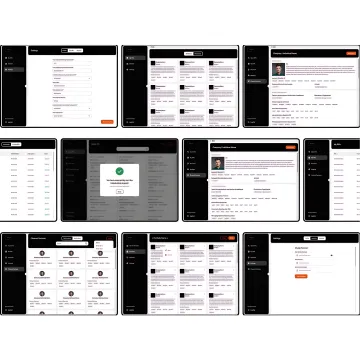
We open with a focused 90-minute stakeholder session to align on product vision, target users, and what the prototype needs to accomplish. User research and competitive mapping follow, establishing the specific decisions the prototype needs to support before design begins.
From early-stage climate tech teams validating product flows before their first pilot, to Series A companies rebuilding UX ahead of enterprise sales, What if Design has helped technical product teams translate complex functionality into experiences their buyers can actually navigate.
"Working with What If has been transformative — faster feature roll outs, reduced development costs, and a fantastic user experience. They quickly understood our vision and offered proactive ideas"

"They very quickly understood the kind of messaging that was important to us and how to translate that into a compelling visual experience. I can't recommend them enough!"

"The extremely high quality of outputs with fast turn around times and availability of team at short notice has been perfect for our requirements"

"Working with What If has been transformative — faster feature roll outs, reduced development costs, and a fantastic user experience. They quickly understood our vision and offered proactive ideas"
"They very quickly understood the kind of messaging that was important to us and how to translate that into a compelling visual experience. I can't recommend them enough!"
"The extremely high quality of outputs with fast turn around times and availability of team at short notice has been perfect for our requirements"
"Working with What If has been transformative — faster feature roll outs, reduced development costs, and a fantastic user experience. They quickly understood our vision and offered proactive ideas"
"They very quickly understood the kind of messaging that was important to us and how to translate that into a compelling visual experience. I can't recommend them enough!"
"The extremely high quality of outputs with fast turn around times and availability of team at short notice has been perfect for our requirements"
We work exclusively with climate and deep-tech companies, which means we already understand your product's technical context, your audience's skepticism, and the sales cycles you're navigating.
We work with utility software, carbon accounting platforms, grid analytics tools, and energy management systems. That familiarity means less onboarding time from your side and prototypes that reflect your actual product complexity from the first iteration.
We work in focused design sprints that move quickly without sacrificing structure. For time-sensitive milestones like investor meetings or product launches, we scope work to fit your timeline rather than the other way around.
Every flow decision is grounded in user research, competitive mapping, and usability testing. We validate assumptions before development starts, which reduces the number of post-launch corrections your team will need to manage.
For most early-stage and growth-stage teams, a full-time senior UX hire is not the right next step. We provide senior-level UX strategy and execution at a cost that fits your stage, with full support from first wireframe through developer handoff.
The team behind What if Design brings architecture, business operations, and deep-tech domain knowledge into every UX engagement.

Co-founder
Akhila brings a spatial design perspective to UX prototyping, having worked on LEED-certified buildings and $100M+ urban interventions that shaped how large numbers of people move through and use complex environments. That background in large-scale systems directly informs her approach to information architecture — she thinks about how users navigate, where they get lost, and what creates friction at a structural level. Before co-founding What if Design, she specialized in creating user-centered environments where form follows function. She applies the same principle to digital product design: every flow decision should serve the user's next action, not the team's assumptions. Akhila is particularly effective with climate tech and deep-tech prototypes that need to communicate sophisticated concepts across multiple audience types — investors, operators, and buyers who each arrive with different levels of technical familiarity.

Co-founder
Tejas brings operational and business growth experience to design strategy, having driven expansion for OYO across three countries and trained over 1,700 people across India. His background in scaling complex operations across diverse markets shapes how he evaluates design decisions, always in the context of what drives business outcomes, not just what looks good on a screen. Before co-founding What if Design, Tejas developed a clear understanding of what makes products succeed in competitive markets where buyers are skeptical and sales cycles are long. He now channels that into prototype validation frameworks that tie every UX decision to a measurable business goal. His particular focus is on the gap between how a product works and how clearly that value comes through to the buyer, a gap that shows up repeatedly in climate and energy software where the technology is strong but the experience often assumes too much prior knowledge.
Timeline depends on complexity and scope. Low-fidelity wireframes can typically be delivered in 1 to 2 weeks, while comprehensive high-fidelity prototypes take 4 to 8 weeks. For time-sensitive needs like investor presentations or pre-conference launches, we scope focused sprint engagements to fit your deadline. Get in touch and we'll give you a realistic timeline based on your product.
If your product flows are slowing down pilots, investor demos, or developer handoff, let's look at where the friction is.
Share your project details and we'll respond within 24 hours with a focused scope based on what your product needs right now.
For immediate assistance, feel free to give us a direct call at You can also send us a quick email at team@whatifdesign.in
For immediate assistance, feel free to give us a direct call at You can also send us a quick email at team@whatifdesign.in