What does a UX consultant really do?
Your product works. Users are getting through the flows. But activation is slower than it should be, support tickets keep pointing to the same friction points, and the onboarding your team shipped 18 months ago hasn't been revisited since.
This is the pattern that triggers most conversations about bringing in UX consulting support. It's especially common in climate and deep-tech companies, where your teams have spent years focused on building something technically difficult — and the product experience has quietly fallen behind.
The decision to bring in a UX consultant is not a design decision. It's a product strategy decision. And for your company, where buyers are technical, skeptical, or evaluating a category that didn't fully exist five years ago, getting the experience right is often the difference between a deal that closes and one that stalls.
This guide covers what UX consultants actually do, what separates them from in-house designers, and — most importantly — the specific signs that tell you it's time to bring one in.
TLDR: key takeaways
- The clearest signal you need a UX consultant: product complexity has outpaced the experience it delivers
- UX consultants solve product experience problems at a systems level — they define the problem, not just execute solutions
- They work on project-based engagements and bring outside perspective that internal teams can't sustain on their own
- Business impact is the measure: conversion, retention, activation, and revenue — not just usability scores
- For climate and deep-tech companies, a high-stakes visibility moment — fundraise, enterprise demo, product launch — often surfaces the gap fastest
What does a UX consultant actually do?
Diagnosing experience problems across ecosystems
UX consultants audit entire product ecosystems rather than individual features. For climate and deep-tech companies, this matters more than in a typical SaaS context: your users may be utility engineers navigating a grid monitoring dashboard, procurement leads evaluating an ESG reporting tool, or field technicians working with a fleet management interface. The experience gaps across those touchpoints are rarely obvious from the inside.
They identify systemic friction across web, mobile, and operational interfaces that internal teams are often too close to see objectively.
Diagnostic work typically includes:
- Cross-platform friction analysis spanning multiple customer touchpoints
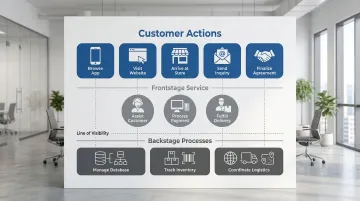
- Service blueprinting to map relationships between user interactions and internal processes
- Identifying experience gaps that aren't visible through standard product analytics
- Research with specific user types — including technical buyers and operators who use your product in complex environments
Service blueprints reveal how customer-facing touchpoints connect to backend systems and internal processes. This surfaces redundancies and operational inefficiencies that your internal teams consistently miss because they're embedded in the existing structure.
Take a common pattern: a Series A grid-edge software company runs a service blueprint and discovers their onboarding requires a procurement evaluator to complete seven steps before reaching any meaningful output. Their team had normalized this because they navigated it through muscle memory. After reducing to three steps, the same evaluation path took minutes instead of a full session — and pilots started converting to contracts at a higher rate. That diagnostic visibility is what you're buying.
Influencing product strategy, not just execution
Consultants translate executive business objectives into practical UX strategies. They participate in product and leadership conversations, influence roadmaps, and ensure design investments drive measurable results — reduced churn, increased activation, improved demo-to-close rates.
That means converting your revenue targets and market expansion goals into user experience priorities, creating roadmaps that sequence work by user problem and business value, establishing governance frameworks that outlast the engagement, and aligning design investment directly with investor narrative and enterprise buyer expectations.
Conducting research and discovery
Research drives consultant recommendations. They conduct stakeholder interviews, competitive analysis, and user research synthesis, presenting findings that shape critical product decisions.
Core activities span stakeholder interviews to understand your organizational needs and constraints, competitive landscape analysis to identify differentiation opportunities, user research synthesis combining qualitative and quantitative data, and workshop facilitation to build alignment across departments.
Consultants working with climate and deep-tech companies often need to get into the actual operating environment — understanding how field technicians interact with dashboards, how procurement teams evaluate unfamiliar technology categories, or how enterprise buyers assess risk in a sales process. Generic research methods don't always surface what matters in these contexts.
Building frameworks that outlast the engagement
Consultants create design systems, establish UX processes, and build infrastructure that continues delivering value after the engagement ends. The output is not just interfaces — it's the foundation that makes every subsequent design decision faster and more consistent.
Strategic deliverables include:
- Design systems ensuring consistency and efficiency across products
- UX maturity assessments identifying where the organization needs to grow
- Process documentation enabling teams to maintain quality independently
- Training programs building internal UX expertise
For enterprise buyers running vendor due diligence — especially procurement teams evaluating an unfamiliar technology category — a coherent design system and documented UX process signals organizational maturity that no single polished screen can convey. It answers the implicit question: does this team build things that scale?
Connecting UX decisions to business outcomes
Unlike designers who focus primarily on usability improvements, consultants connect every UX decision to business metrics. They speak the language of executives, justifying recommendations with data on conversion rates, retention, and revenue.
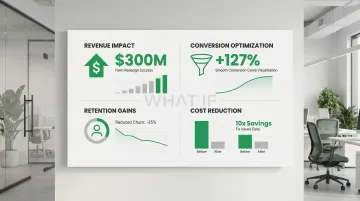
Impact measurement focuses on:
- Revenue impact: documented examples include form design changes that increased e-commerce revenue by $300 million
- Conversion optimization: data-driven design changes that improve funnel performance
- Retention gains: experience improvements that reduce churn at specific product moments
- Cost reduction: fixing UX errors during development costs 10x less than post-release
According to McKinsey research, design-driven companies outperform peers by 32% in revenue growth and 56% in shareholder returns. For climate and deep-tech companies like yours competing against established incumbents with larger teams and bigger budgets, that execution gap compounds quickly.
UX consultant vs UX designer: what you're actually buying
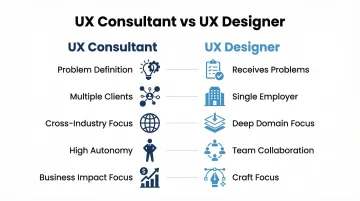
UX designers execute specific projects within established processes — designing a feature, improving a checkout flow, or creating wireframes based on product requirements. They work deeply on defined problems handed to them by product managers.
UX consultants take a systems-level view of organizational challenges. They define the problem itself, determine what needs to be done, and often create the processes that designers work within. This outside perspective helps you see what your internal teams miss when they're embedded in daily execution.
Key differences:
| Aspect | UX consultant | UX designer |
|---|---|---|
| Problem definition | Defines the problem and approach | Receives defined problems to solve |
| Engagement structure | Multiple clients, temporary engagements | Single employer, long-term commitment |
| Perspective | Outside view across industries | Deep domain focus within one product |
| Primary output | Strategy, frameworks, diagnosis | Execution: flows, interfaces, prototypes |
Hourly rates typically range from $100-300+ depending on experience and specialization. According to Glassdoor data, equivalent annual compensation runs $140,000-$183,000+, reflecting strategic scope, income volatility, and the overhead of running an independent practice. In-house UX designers earn stable salaries averaging $108,000-$120,000, with benefits and predictable income focused purely on execution.
The clearest way to think about the decision: if you need someone executing design work daily across a growing roadmap, that's a full-time hire. If you need to define what to build, establish a process, diagnose where the experience is failing, or prepare for a high-stakes moment — that's consultant territory.
The top signs you need a UX consultant
Most articles on this topic treat "when to hire a consultant" as an afterthought. It's actually the question that matters most — and for climate and deep-tech companies, there are patterns that show up consistently enough to serve as real diagnostics.
1. Your product complexity has outpaced your user experience
You ship fast and iterate later. That's the right call when you're validating product-market fit. But when the product grows in capability and the onboarding, navigation, and information architecture haven't kept pace, the gap starts showing up in the numbers: longer time-to-value, higher support load, churn at moments that should be high-value.
For climate and deep-tech companies, this happens quickly. A grid monitoring platform adds three new data layers. A carbon accounting tool expands to cover scope 3. A fleet management system integrates with a new hardware partner. Each addition makes sense technically. Together, they create a product that existing users navigate through muscle memory while new users find genuinely difficult to get started with. In a typical scenario, time-to-first-value for a new evaluation user runs three to four times longer than for a trained power user — a gap that shows up in pilot conversion before anyone names it as a UX problem.
2. You're preparing for a high-stakes visibility moment
A conference demo. A partnership launch. A Series B announcement. An enterprise sales process that's reached the evaluation stage.
These moments put your product in front of skeptical audiences making fast judgments. Technical reviewers, investors, and enterprise procurement teams are evaluating credibility alongside capability. If the experience doesn't reflect the quality of the underlying technology — if it feels unfinished, inconsistent, or confusing — that gap becomes visible in exactly the context where it costs the most.
3. Your team is too close to the product to see where users get stuck
Your internal teams understand the product deeply. That's a genuine asset for most things and a liability when you're trying to see it through the eyes of a procurement lead evaluating for the first time, or a field technician using it under real conditions.
What seems obvious to your team is often not obvious to someone encountering it fresh. An outside perspective — particularly from someone experienced with complex technical products — surfaces friction that internal reviews consistently miss. A common example: the founder demos their product in five minutes daily, while a first-time procurement evaluator takes twenty — not because the product lacks capability, but because every shortcut the founder takes is invisible to someone encountering the interface for the first time. An outside observer surfaces this in a single structured session.
4. Your activation or retention metrics point to experience problems
If users are reaching the product but not activating, if demo-to-close rates are lower than expected, or if churned accounts point to confusion rather than capability gaps — the product experience is usually a contributing factor.
The specific signal here is when your team can identify a problem in the numbers but can't diagnose what's causing it. A UX consultant can run structured research to identify exactly where drop-off is happening and why, then sequence design changes by expected business impact. Often the issue is concentrated in a single step — an ambiguous onboarding action, a missing confirmation state, a navigation element that doesn't match how your buyer thinks about the product. Once correctly identified, it's a targeted fix that moves a metric, not a full redesign.
5. You need to demonstrate UX maturity before hiring full-time
Between funding rounds, or when preparing to scale the product team, there's often a window where you need to show UX maturity without yet having a full-time designer. This matters to enterprise buyers who evaluate vendor stability, to investors who read product quality as a signal of organizational capability, and to future hires who want to join a team with clear design processes.
A consultant can establish a design system, define a UX process, create a prioritized backlog, and document the approach in a way that a full-time hire can build on immediately.
6. Your buyers are evaluating an unfamiliar category
This one is specific to climate and deep-tech, and it's consistently underestimated. When you're selling into enterprise markets that don't have established buying criteria for what you've built — when procurement teams lack a framework for evaluating grid-edge software or carbon accounting platforms — the product experience carries more weight than in mature categories.
Skeptical buyers use the quality of the experience as a proxy for the quality of the company. A polished, intuitive experience signals that your team has thought carefully about users. A rough experience raises questions that undermine even strong underlying technology.
If one or more of these patterns describes where you are, it's worth a conversation. We work with climate and deep-tech companies at exactly these inflection points. See how we can help
What to expect from a UX consulting engagement
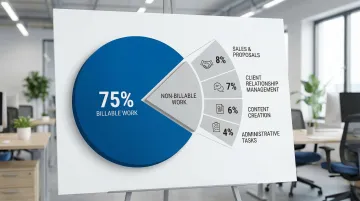
Most project-based engagements run between four and twelve weeks depending on scope. A focused UX audit typically takes two to four weeks. A broader engagement covering research, strategy, and design system setup runs eight to twelve weeks.
What separates an engagement that creates real change from one that produces deliverables you can't act on:
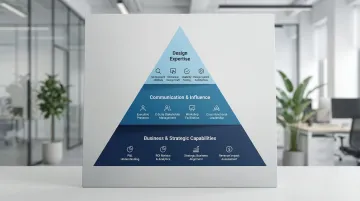
A clear diagnostic phase first. Before recommendations, consultants need to understand the actual problem. Stakeholder interviews, analytics review, user research, and a structured audit of the current experience should produce a prioritized problem statement — not a list of design preferences.
Deliverables your team can act on independently. Good consulting produces artifacts that outlast the engagement: a design system, a documented UX process, a research synthesis, a prioritized improvement backlog. Not just a presentation deck.
Business impact framing throughout. Every recommendation should connect to a metric: activation rate, conversion, churn, support volume, demo-to-close rate. If you can't see how a recommendation connects to a business outcome, push for that clarity before anything goes to implementation.
Communication that stands on its own. Documentation and recommendations should be clear enough that a stakeholder who wasn't in the design sessions can understand and evaluate them independently.
When a full-time hire makes more sense
A consultant is the right fit for bounded engagements with specific outcomes. If you need someone embedded in daily product decisions over 12-18 months, a full-time hire with deep domain context will typically deliver more sustained value than project-based consulting.
The clearest signal is whether your primary challenge is strategic clarity or execution volume. If you need to define what to build, establish a design process, or audit where the experience is failing — that's consultant territory. If you need someone executing design work daily across a growing product roadmap — you're describing a full-time role. And if you have an enterprise evaluation or fundraise in the next 60 days, a consultant will move faster than any new hire can onboard — the deadline itself usually clarifies the choice.
Frequently asked questions about UX consultants
What's the difference between a UX consultant and a UX designer?
A UX designer typically works within a defined problem space, executing flows, wireframes, and interfaces based on direction from product managers. A UX consultant defines the problem itself, assesses what needs to change at a systems level, and often creates the frameworks that designers then work within. The scope, autonomy, and deliverables are fundamentally different.
How long does a typical UX consulting engagement last?
Most project-based engagements run between four and twelve weeks depending on scope. A focused UX audit might be completed in two to four weeks. A broader engagement covering research, strategy, and design system setup typically runs eight to twelve weeks. Ongoing partnerships are structured differently and vary by work volume.
How do I know if I need a consultant versus a full-time UX hire?
If your challenge is bounded and strategic — auditing a specific flow, establishing a design process, preparing for a product launch — a consultant will likely deliver faster results with less overhead. If you need someone deeply embedded in daily product decisions over the long term, a full-time hire with domain context will usually outperform project-based consulting. The clearest signal is whether you need strategy and diagnosis or ongoing execution. If there's commercial urgency — an enterprise pilot that needs to convert, a procurement evaluation in progress, a fundraise where product quality is being scrutinised — a consultant is typically the faster path to the outcome you need.
What should I expect to pay for UX consulting?
Hourly rates typically range from $100 to $300+ depending on experience and specialization. Project-based engagements for climate and deep-tech companies often run between $15,000 and $80,000 depending on scope and deliverables. The rate reflects not just design hours, but the strategic thinking, research, and business development overhead consultants carry independently.