Your product works. Your pilot data is real. Your deck landed the raise. But when a potential partner or investor types your company name into a browser, what they find still reads like a research project, not a company ready to scale.
This is a positioning problem, not a design one. The gap between where your technology actually is and how your digital presence communicates it creates friction at exactly the wrong moments: when a procurement team is vetting you, when a co-investor is doing due diligence, or when a strategic partner is deciding whether to take the next call.
Bangalore hosts a concentration of UI/UX design agencies with the technical fluency to close that gap. This guide walks through the top agencies in the city, what makes each one distinct, and how to evaluate which type of partner fits your stage, sector, and specific problem.
TL;DR
- Bangalore concentrates a significant share of India's tech activity, with a mature pool of UI/UX agencies spanning research studios to full-service digital partners
- The right agency depends on your technical domain, stakeholder mix, and stage, not just portfolio size or client logos
- Pricing ranges from Rs 3-5 lakh for mid-sized projects to Rs 7-12 lakh or more for enterprise-scope work
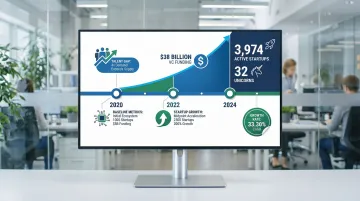
- The Asia-Pacific UI/UX market is projected to grow at 33.30% CAGR through 2031, driving both demand and talent competition
- For climate and deep-tech companies, domain familiarity in your agency partner reduces ramp-up time and messaging risk
Overview of UI/UX design services in Bangalore
User Experience (UX) design covers all aspects of how end-users interact with a company's products and services, from initial onboarding through day-to-day use. For technical products, this includes the way complex workflows are structured, how data is visualized, and how much cognitive load the interface places on the user.
User Interface (UI) design addresses the visual layer: typography, color systems, component libraries, and the interactive patterns that make a product usable across different devices and contexts.
These complementary disciplines have found a natural home in Bangalore, which has emerged as India's design hub for three practical reasons:
- Talent density: The city has a high concentration of data scientists and technical designers, and leads the Asia-Pacific region in tech talent acquisition
- Startup ecosystem maturity: Ranked #14 globally by Startup Blink, with a significant share of India's active startups operating here
- Infrastructure advantage: Tech Global Capability Centers leased 5.2 million square feet in 2025, creating consistent demand for enterprise-grade design capability
The Asia-Pacific UI/UX market is projected to grow at 33.30% CAGR through 2031, driven by cloud-based deployment and mobile-first product development.
This growth has created a noticeable talent shortage. Experienced designers are in high demand across major tech hubs, which is part of why agency partnerships have become a more strategic consideration for companies at the growth stage. For you, the practical implication is that the agency you work with will either accelerate or delay your ability to put credible materials in front of buyers. That gap shows up in deal cycles, not just deliverables.
Top UI/UX design agencies in Bangalore
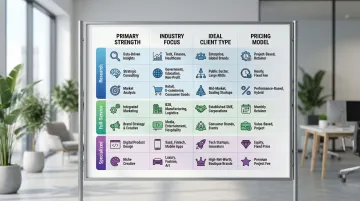
The agencies below were selected based on portfolio quality, verified client work, industry experience, design methodology, and documented track records across multiple sectors. Each has a distinct positioning worth understanding before you make contact.
Lollypop Design Studio
Founded in 2013, Lollypop has built its reputation on research-led design for high-growth consumer platforms, with delivery centers across multiple continents. The work spans edtech, BFSI, and media applications, with a consistent emphasis on understanding cultural context before arriving at visual solutions.
Key strengths include systematic user research methodologies and demonstrated depth across consumer-facing platforms. The agency has won iF Design and Red Dot awards, which validate output quality against international benchmarks. For companies going into enterprise evaluations, that research rigour gives procurement teams something substantive to assess — not just polished visuals.
| Category | Details |
|---|---|
| Services offered | UX research, digital branding, app design, web applications, design systems |
| Industries served | B2B, B2C, EdTech, media, consumer platforms, BFSI |
| Notable clients | Google, SBI, Flipkart, Paytm, Myntra, Voot, Cisco, Intel, TATA Cliq, Asian Paints |
| Hourly rate | Rs 2,100-Rs 4,100 ($25-$49) |
What if Design
What if Design operates from San Francisco and Bangalore, founded in 2020 by IIT Kharagpur alumni. The agency works specifically with climate tech and sustainability-focused organizations, with a focus on making complex technologies legible to investors, enterprise partners, and buyers.
Their subscription-based model suits companies with ongoing design needs rather than one-off projects. The portfolio includes products built for companies backed by Accel and Sequoia Capital, with pitch materials tied to over $45M in fundraising across their client base. Typical brand and website projects reach completion in 2 to 4 weeks, which is notably faster than most traditional agencies.
| Category | Details |
|---|---|
| Services offered | Brand strategy, UI/UX design, web design (Webflow), product design, pitch deck design, user research |
| Industries served | Climate tech, green tech, clean tech, sustainable tech, ESG companies, carbon capture, electric vehicles |
| Notable clients | TATA1mg, Ministry of Health Saudi Arabia, HYDGEN, Accel Partners, Ribbit Network, Pristyn Care |
| Pricing model | Subscription-based: Rs 2.5L-Rs 5.8L/month ($3,000-$7,000/month) |

Think Design
Established in 2004, Think Design is one of Bangalore's longest-running design consultancies, with over two decades focused on enterprise software, BFSI, and fintech. If usability directly affects your operational efficiency, that depth of sector experience matters — and when you're competing against an entrenched incumbent, interface quality often becomes the deciding signal in a buyer evaluation.
The agency has developed proprietary research frameworks, including the 'Golden Grid,' which inform how they structure design decisions from research through delivery. Their iF Design Award win in 2018 is one indicator of sustained output quality over time.
| Category | Details |
|---|---|
| Services offered | UI/UX design, user research, service design, data visualization, design systems, information architecture |
| Industries served | Enterprise/IT, BFSI, fintech, healthcare, EdTech, media |
| Notable clients | GE, Honeywell, Airtel, Axis Bank, SBI, Samsung, Adobe |
GoProtoz
GoProtoz applies lean UX processes and Design Sprint methodology to projects across fintech, healthcare, automotive, and e-commerce. Their Clutch recognition as a top UI/UX firm in 2019 reflects a structured, process-oriented approach rather than purely aesthetic output.
The agency has particular depth in UX audits and AI/ML workflow design, which makes them useful for products where the interface needs to surface complex data clearly. You'd typically come to GoProtoz with a specific usability gap to diagnose and resolve quickly. Fixing a core workflow issue before your next enterprise demo can be the difference between a second conversation and a stalled evaluation.
| Category | Details |
|---|---|
| Services offered | UX/UI design, UX strategy, UX research, prototyping, web development, Design Sprints |
| Industries served | Fintech, healthcare, e-commerce, automotive, AI/ML |
| Notable clients | Sony, Nissan, ICICI, Paytm Money, Tata, Mahindra, Licious |
| Hourly rate | Rs 2,100-Rs 4,100 ($25-$49) |
Octet Design Studio
Octet has built a focused practice around simplifying complex digital flows for SaaS, enterprise, and B2B products since 2017. Their client work tends to involve multi-stakeholder software systems, data visualization challenges, and products where the user base has a wide range of technical proficiency.
The combination of lean and agile delivery with rigorous usability testing makes Octet well-suited if you need to validate design decisions quickly before engineering investment — particularly when you're moving from a pilot to a full contract and a buyer's technical team is scrutinising whether the product can scale. Red Dot and Kyoorius award recognition confirms their design quality at an output level.
| Category | Details |
|---|---|
| Services offered | User research, UI/UX design, usability testing, design systems, UI development |
| Industries served | SaaS, B2B, enterprise, FinTech, HealthTech, logistics, MarTech |
| Notable clients | Adani, TVS, Aditya Birla, IIMA, Visa, Intellect, MIT India |
NetBramha Studios
NetBramha positions itself as a design-led transformation partner with a service design and experience mapping focus. The agency has worked with Google and Microsoft, and holds a Great Place to Work certification, which tends to correlate with lower designer turnover and more consistent delivery quality across longer engagements.
Their Design Sprint capability and experience mapping work are particularly relevant if you're going through digital transformation at scale, where the challenge is less about individual screen design and more about restructuring entire service flows. If your deal requires sign-off from multiple departments, that kind of structured mapping helps you design for every stakeholder in the room, not just the day-to-day user.
| Category | Details |
|---|---|
| Services offered | Service design, Design Sprints, UX strategy, experience mapping, UI/UX design |
| Industries served | Enterprise, technology, finance, e-commerce, healthcare |
| Notable clients | Google, HDFC, Microsoft, McKinsey, Emaar, Cisco, and 200+ global clients |
GoodWorkLabs
GoodWorkLabs operates as an end-to-end digital partner, combining UI/UX design with software development across AI/ML, IoT, and AR/VR projects. The Deloitte Fast 50 recognition in 2016 reflects their growth trajectory in a competitive market.
If you need a single vendor to handle both design and technical implementation, the full-stack model removes the handoff friction that often slows down product timelines. This is particularly relevant where design decisions have direct implications for system architecture — and if your sales cycle involves technical proof-of-concept demos, having both disciplines under one roof means you can iterate on the interface and the implementation without losing time between teams.
| Category | Details |
|---|---|
| Services offered | UI/UX design, mobile/web development, AI/ML, digital transformation, DevOps, design thinking |
| Industries served | BFSI, education, e-commerce, healthcare, automotive, media |
| Notable clients | Flipkart, Samsung, ST Dupont, Phoenix Marketcity, Curefit, Cred, SAP, Google |
How we chose the best UI/UX design agencies
Selecting the right agency requires evaluating several dimensions that don't always show up in a portfolio overview.
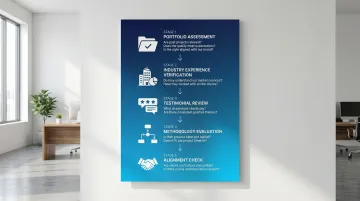
Portfolio quality assessment
When you review portfolios, look beyond aesthetic consistency. For climate and deep-tech companies, the more useful question is whether the agency has translated something technically complex into a form a non-expert buyer could immediately understand. Review case studies end-to-end: what was the brief, what problem was being solved, and what measurably changed after the redesign?
Mockups without context tell you very little. Agencies that show process documentation, research synthesis, and before/after comparisons are far more likely to deliver work that holds up under scrutiny from investors and enterprise buyers. Consider the difference between a portfolio that shows a finished dashboard and one that walks from discovery through a failed prototype to a final design that reduced enterprise onboarding time by 40%. The second tells a buyer-ready story — and it tells you the agency can produce one for you.
Industry experience verification
Sector familiarity matters in ways that are not always obvious. If you're building in climate tech or deep tech, you often need to communicate to multiple audiences simultaneously: investors evaluating commercial viability, enterprise buyers comparing against incumbent solutions, and policy stakeholders reviewing regulatory alignment. An agency that has not worked in this context tends to default to single-audience messaging. A carbon capture company that went to a generalist agency ahead of a utility partnership found their materials optimised for investors — which worked for their raise but confused the procurement team on the other side of the table six months later.
Ask specifically: have they worked with companies at a similar funding stage, in a comparable technical domain, with similarly segmented stakeholders? Portfolio breadth across industries is less useful than demonstrated depth in contexts similar to yours.
Client references and third-party validation
Beyond portfolio reviews, references reveal how agencies perform under real-world conditions. Third-party platforms like Clutch provide independent feedback on reliability, communication quality, and delivery consistency. Look specifically for evidence of how agencies handle scope changes, missed deadlines, or unexpected technical constraints, because those situations are where most design relationships break down.
Common selection mistakes to avoid
The most common mistake is optimising for cost alone. Poor UX is expensive to fix after launch, and the cheapest agency rarely delivers the best return on a high-stakes project. Misaligned communication styles are equally costly — they compound over the length of a project in ways that are easy to underestimate at the start. Check specifically whether the agency provides ongoing post-launch support or hands over files and disappears. And before you sign, verify the agency's specific contribution to the projects they feature in their portfolio.
Design process and methodology
Agencies using structured approaches tend to deliver more predictable outcomes. Look for design thinking frameworks that define the problem before generating solutions, user research integration through interviews, surveys, and usability testing, and iterative refinement across multiple cycles based on real feedback rather than internal assumption.
Critical alignment factors
Confirm that budget expectations are compatible with your project scope and the return you are realistically targeting. Check whether they can deliver within your market window — whether that is a funding round, a product launch, or a key conference. Communication style matters more than founders expect: weekly check-ins, transparent reporting, and clear escalation paths are what keep projects on track when scope shifts. The strongest agencies understand what success looks like for your business, not just for the design deliverable.
Conclusion
Bangalore has a deep bench of design agencies across research-intensive studios, enterprise-focused consultancies, and full-service digital partners. The agencies featured here, including Lollypop, Think Design, Octet, GoProtoz, NetBramha, GoodWorkLabs, and What if Design, each bring distinct strengths depending on your sector and stage.
Your decision comes down to three things: whether the agency understands your technical domain, whether they have worked with companies at a similar funding stage, and whether they are equipped to support the specific outcome you are working toward — whether that is a fundraise, a product launch, or an enterprise sales cycle.
If you are building in climate tech, clean energy, or deep tech, the domain fluency question matters more than usual. Translating novel technology into messaging that lands with investors, enterprise buyers, and policy stakeholders simultaneously is a specific skill, and most generalist agencies are learning on your budget.
What if Design works specifically with climate and deep-tech startups at the Seed to Series B stage, with offices in San Francisco and Bangalore. The focus is brand strategy, website design, and product UX for companies where the technology is ready but the commercial narrative is still catching up. You can see examples of that work at whatifdesign.co.
If your website has not evolved since your last raise, it is worth assessing the signal it is currently sending.
Frequently asked questions
What is the typical cost of hiring a UI/UX design agency in Bangalore?
Mid-sized projects typically range from Rs 3L to Rs 5L, while enterprise-level work starts at Rs 7L and can exceed Rs 12L. Hourly rates generally fall between Rs 2,100 and Rs 4,100.
What services do UI/UX design agencies in Bangalore typically offer?
Core services include user research, wireframing, prototyping, UI/UX design, usability testing, and design systems. Many agencies also offer front-end development, brand strategy, and specialized services like data visualization or service design.
How do I choose the right UI/UX design agency for my startup?
For climate or deep-tech startups specifically, prioritize agencies with demonstrated experience translating technical subject matter for non-expert audiences. Review whether their portfolio includes companies at a similar funding stage and whether they have worked across multiple stakeholder types such as investors, enterprise buyers, and policy stakeholders. Flexible engagement models, like subscriptions or phased delivery, matter more at early stages when scope often shifts as the company evolves.
What is the 80/20 rule in UX?
The 80/20 rule, also called the Pareto Principle, suggests that 80% of users typically interact with only 20% of a product's features. Designers apply this principle to prioritize optimizing the most-used core flows for maximum impact rather than spreading effort equally across all functionality. For technical products with complex feature sets, this framing helps focus design investment where it reduces the most user friction.
Do these agencies work with international clients?
Yes, most top Bangalore agencies maintain global client bases. Lollypop serves clients across the USA, UAE, and Vietnam. GoodWorkLabs works with companies in Europe and North America. What if Design operates out of both San Francisco and Bangalore, working primarily with US-based clients. Many agencies run dual locations specifically to support international market needs.
What industries do Bangalore UI/UX agencies specialize in?
Common specializations include fintech, healthcare, e-commerce, SaaS, enterprise software, edtech, and climate tech. Many agencies have cross-industry experience, but the strongest results tend to come from partnering with agencies that understand your sector's specific regulatory requirements, buyer behaviors, and competitive dynamics. For climate tech in particular, look for agencies that understand how to communicate to segmented audiences across investor, enterprise, and policy contexts.